Do You Need to Wear Gloves to Care for a Family Member?
Not for everything. Gloves are for tasks involving bodily fluids, broken skin or infection risk. Here is when to wear them and when clean hands are enough.
No, not for everything. Gloves are for tasks that involve bodily fluids, broken skin, or a known infection. For much of daily care, such as helping someone dress, eat or move around, clean hands are enough and often better.
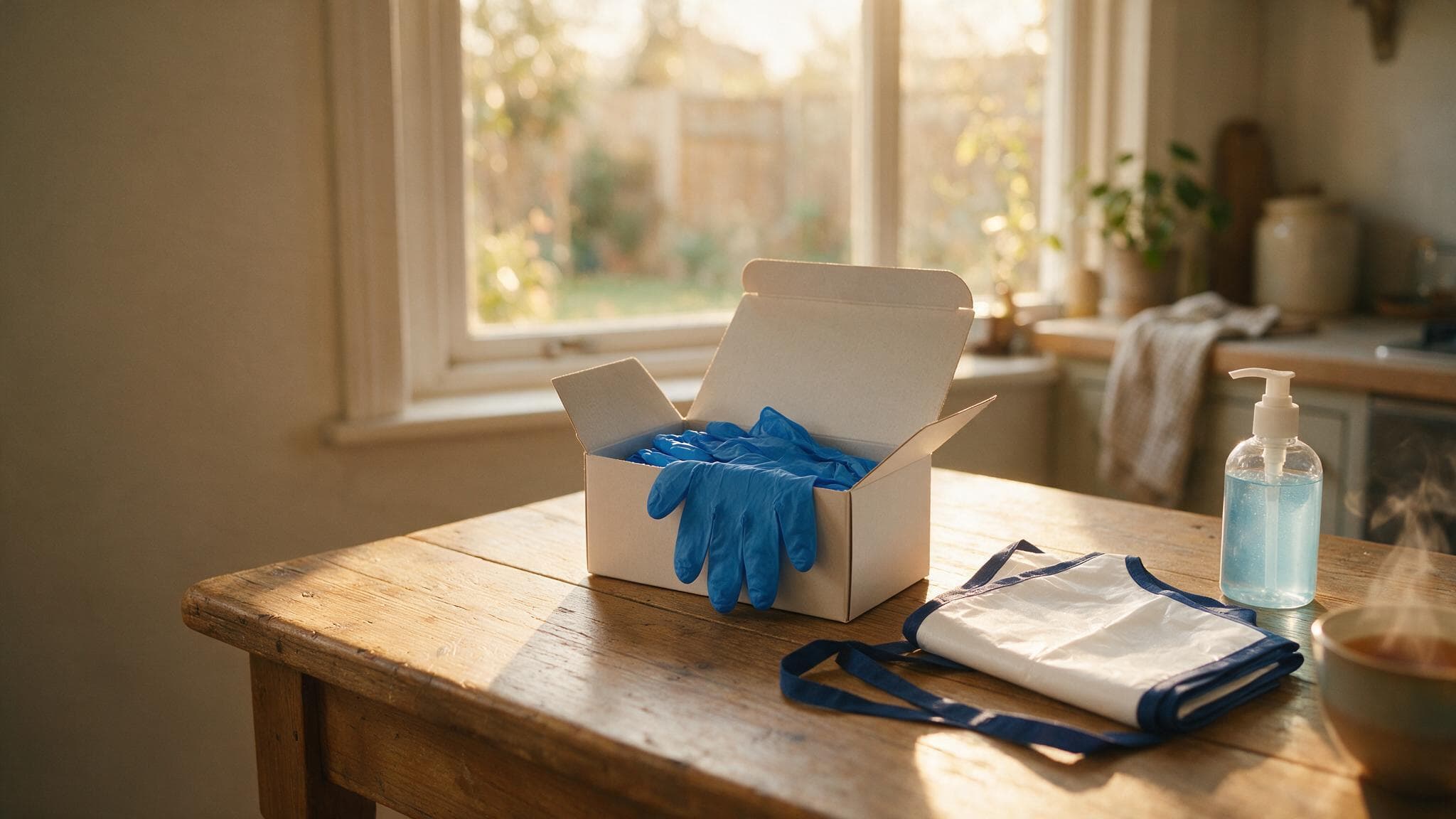
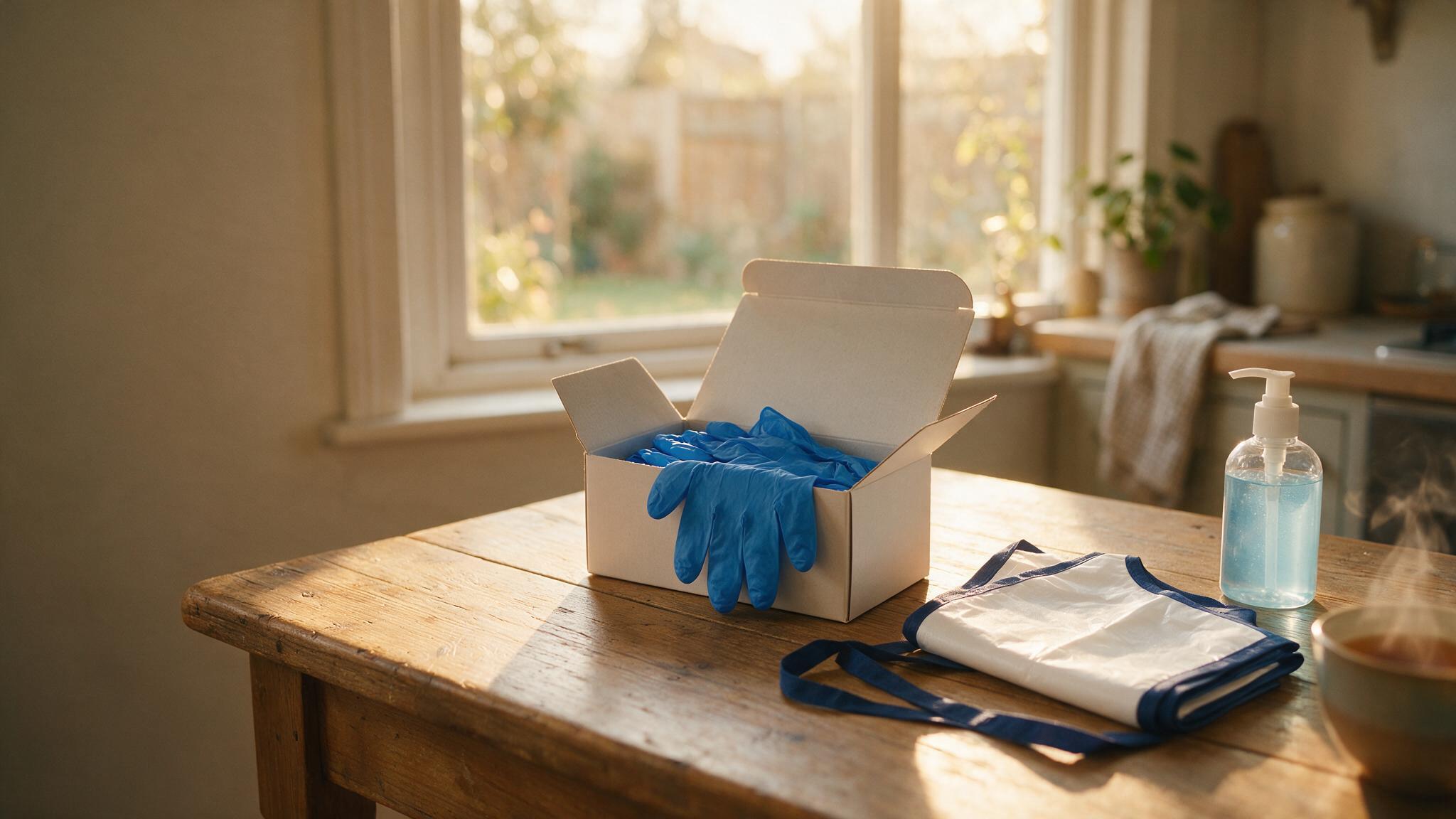
Gloves kept to hand, for the tasks that need them
Many family carers wear gloves for everything, usually out of caution. It is understandable, but it has a cost. It uses supplies quickly, and it can change how care feels for the person receiving it.
When to wear gloves
Task
Gloves?
Helping with toileting or continence care
Yes
Cleaning up any spill of blood or bodily fluid
Yes
Applying creams or dressings to broken skin
Yes
Emptying a catheter bag or commode
Yes
Caring for someone with a known infection
Yes
Helping someone dress or brush their hair
No, clean hands
Helping with eating or drinking
No, clean hands
Assisting someone to walk or stand
No, clean hands
Giving oral medicines from a pot
Usually not
Why not wear them for everything
There are three reasons. Gloves worn for too long give a false sense of security and are often not changed when they should be. They cost money that is better spent on the pairs you genuinely need. And there is a human element that matters: for someone receiving care, being touched through a glove for every interaction can feel clinical when the moment does not call for it.
Gloves for the tasks that need them, clean hands for the rest. That is better practice and it feels better for the person you care for.
OMS Clinical TeamSupporting someone at home, where gloves are not always needed
If in doubt, wear them
None of this means hesitating when you are unsure. If a task might involve bodily fluids, or you are not certain, put gloves on. The guidance above is about avoiding habitual all-day glove wearing, not about talking anyone out of protection.
Which gloves
Powder-free nitrile is the sensible default at home. It is latex-free, so there is no risk of a latex allergy reaction for either of you, and it resists tearing better than vinyl. Get the size right, because a glove that is too small tears at the thumb and one that is too large makes fiddly tasks harder.
Not for everything. Wear gloves for tasks involving bodily fluids, broken skin or a known infection. For helping someone dress, eat or move around, clean hands are enough.
Is it bad to wear gloves all the time?
It is not unsafe, but it uses supplies quickly, can give a false sense of security if gloves are not changed often enough, and can make ordinary moments of care feel clinical for the person receiving it.
What if I am not sure whether to wear gloves?
Put them on. If a task might involve bodily fluids, or you are uncertain, wearing gloves is the right call.