
Medical equipment transport across the UK.
Specialist crews, GDP-compliant vehicles and a chain-of-custody protocol, trusted by hospitals, private clinics, labs and care homes across the UK.
Reply within 2 hours – 1 working day
Emergencies answered immediately
Service Tiers
Three levels of crew, vehicle and handling
Pick the service that matches your equipment's value, fragility and urgency. Every tier is priced per job. Submit a request and we reply quickly.
Standard
Routine deliveries, lighter equipment
Custom quote
Reply within 2 hours – 1 working day
Lead time: 2 – 5 working days
- Single-driver delivery
- Tracked vehicle
- Goods-in-transit insured
- Kerbside or reception drop
- Email + SMS notifications
Specialist
Calibrated, delicate, high-value equipment
Custom quote
Reply within 2 hours – 1 working day
Lead time: 1 – 3 working days
- 2-person trained handlers
- Tail-lift vehicle if required
- Inside-delivery & positioning
- Pre-arrival site survey by phone
- Manual-handling trained crew
- Higher insurance cover
On-Demand Team
Same-day, emergency, critical equipment
Custom quote
Reply within 2 hours – 1 working day
Lead time: Same day / next day
- Dedicated 2-person specialist team
- GDP-compliant transport
- Climate-controlled vehicle option
- Real-time GPS tracking
- White-glove handover protocol
- On-call dispatcher 24 / 7
- DBS-checked, equipment-trained crew
Need it moved today?
When critical equipment cannot wait, our on-demand specialist crew rolls in under an hour from notification across the UK. One call, one dispatcher, fully insured.
24 / 7 Dispatcher
0800 061 4489Tap to call · calls answered within 60 seconds
What we transport
Built for the equipment couriers won't touch
From single instruments to full clinic relocations, every job follows the same equipment-handover protocol with full chain of custody.
Start a booking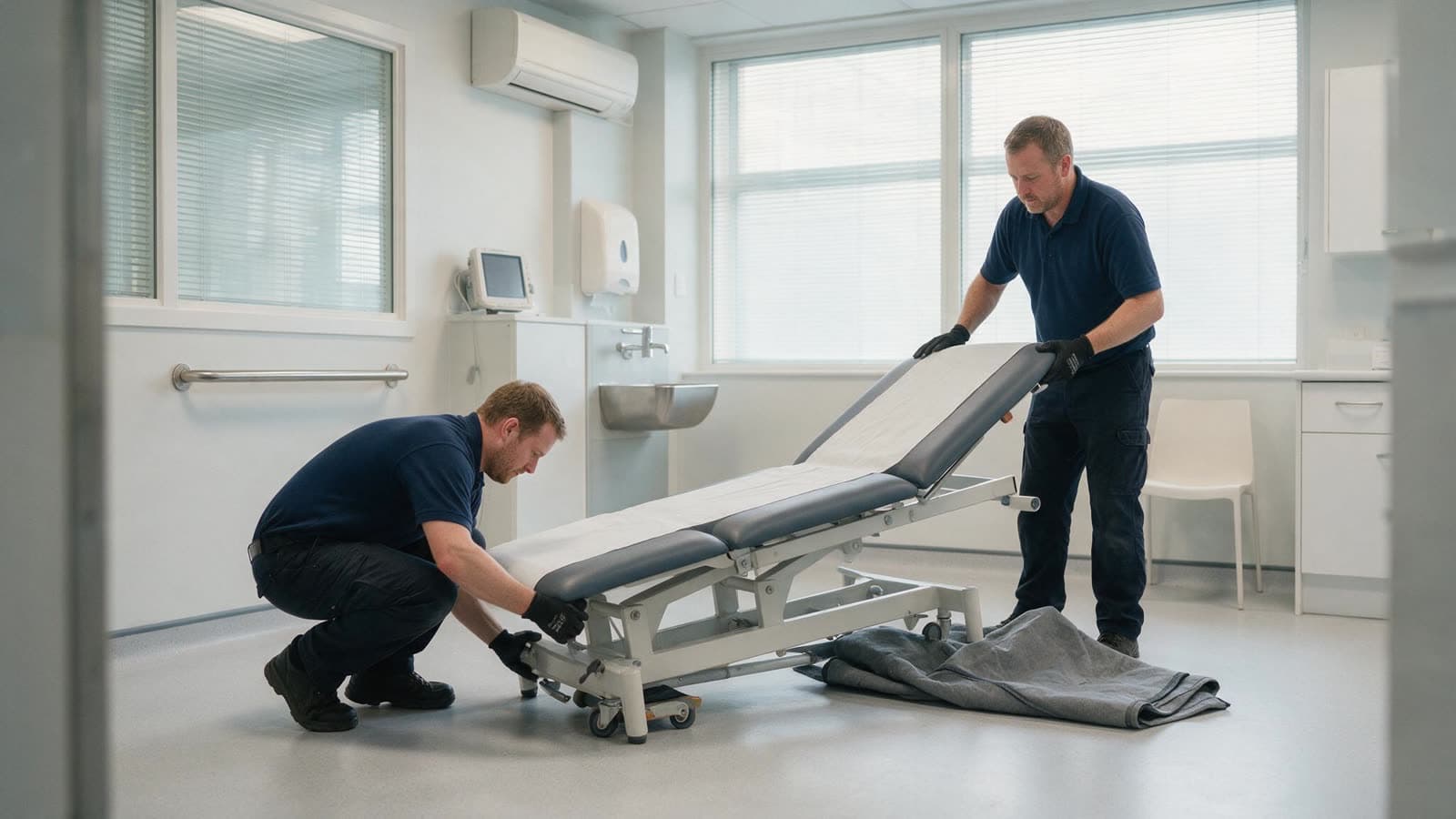
Hospital beds & couches
Electric beds, exam couches, recovery trolleys
Imaging & diagnostics
Ultrasound, ECG, X-ray, patient monitors
Surgical equipment
Surgical lights, autoclaves, instrument trolleys
Dental chairs & units
Treatment chairs, compressors, suction units
Laboratory equipment
Centrifuges, incubators, analyser systems
Refurbished equipment
Redeployments, decommissioning moves
Vehicles and load restraint
The right vehicle, fitted out for the job
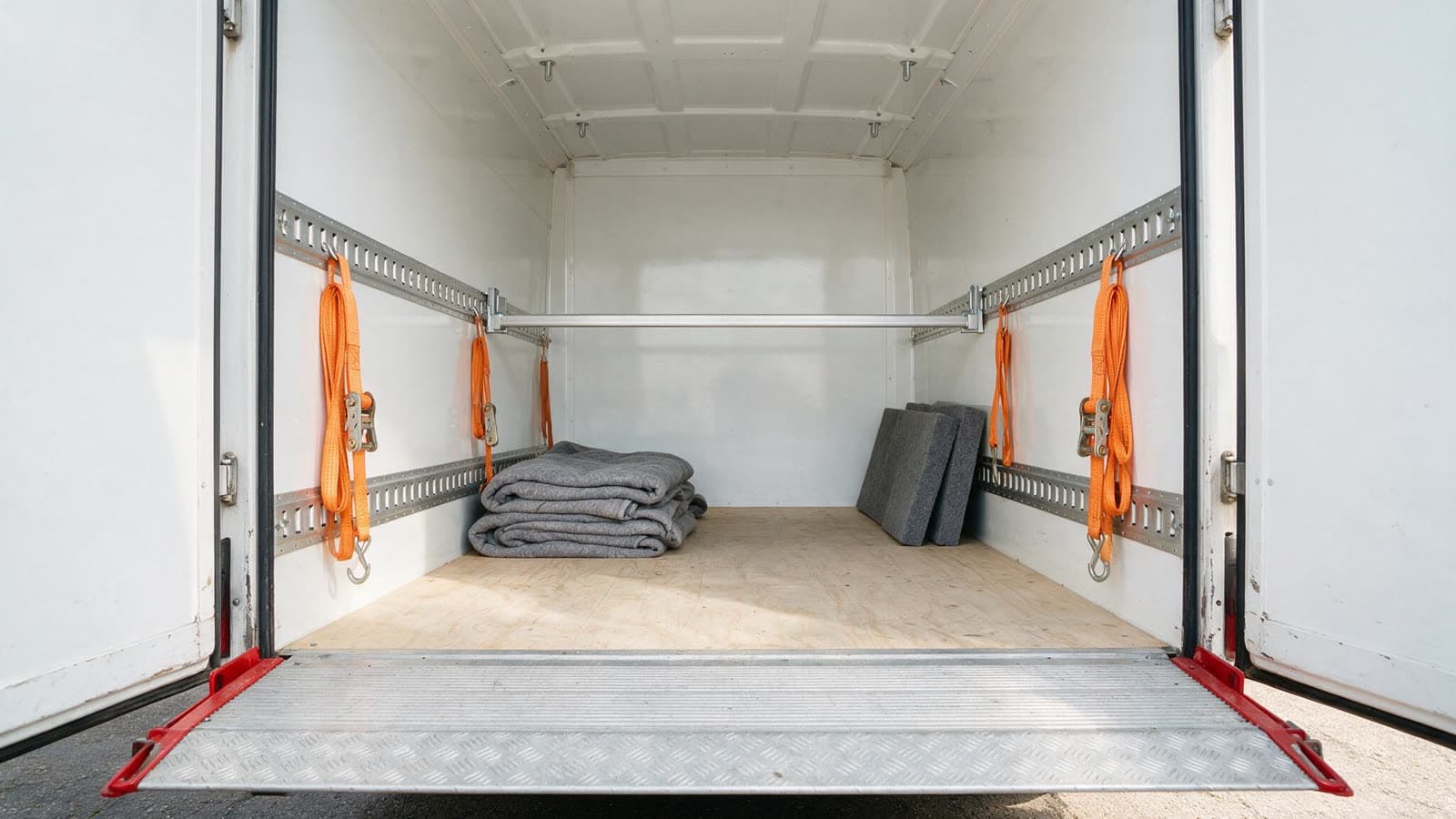
From courier vans to 7.5 tonne hydraulic tail-lift trucks. What matters more than the badge on the front is what is fitted in the back: rated lashing points, load bars, foam and blankets, so nothing travels resting on its own castors.
Courier & box vans
For lighter equipment, instruments and consumable shipments.
Tail-lift box trucks
Hydraulic tail lift, air-ride suspension, secured load points.
Temperature-controlled
For lab samples, reagents and temperature-sensitive equipment.
Why the vehicle matters
What goes wrong with a general courier
Most damaged-equipment calls we take start the same way. Somebody booked a parcel network or a man-and-van because the quote was a third of the price, and the problem only surfaced when the item arrived. Three things cause nearly all of it.
Handling, not distance
A parcel network is built for throughput, so an item is sorted, tipped and stacked several times between collection and delivery. A calibrated instrument does not survive that, and no amount of fragile tape changes how a conveyor works.
Insurance that does not reach
Standard goods-in-transit cover is capped per consignment at a level well below a single ultrasound machine, and medical equipment is often an excluded category outright. Read the exclusions before the job, not after.
Delivered to the wrong place
A courier delivers to the kerb or the first door. Equipment needs to reach a specific room on a specific floor, positioned and left level. A pallet abandoned in a goods-in bay is still your problem on Monday.

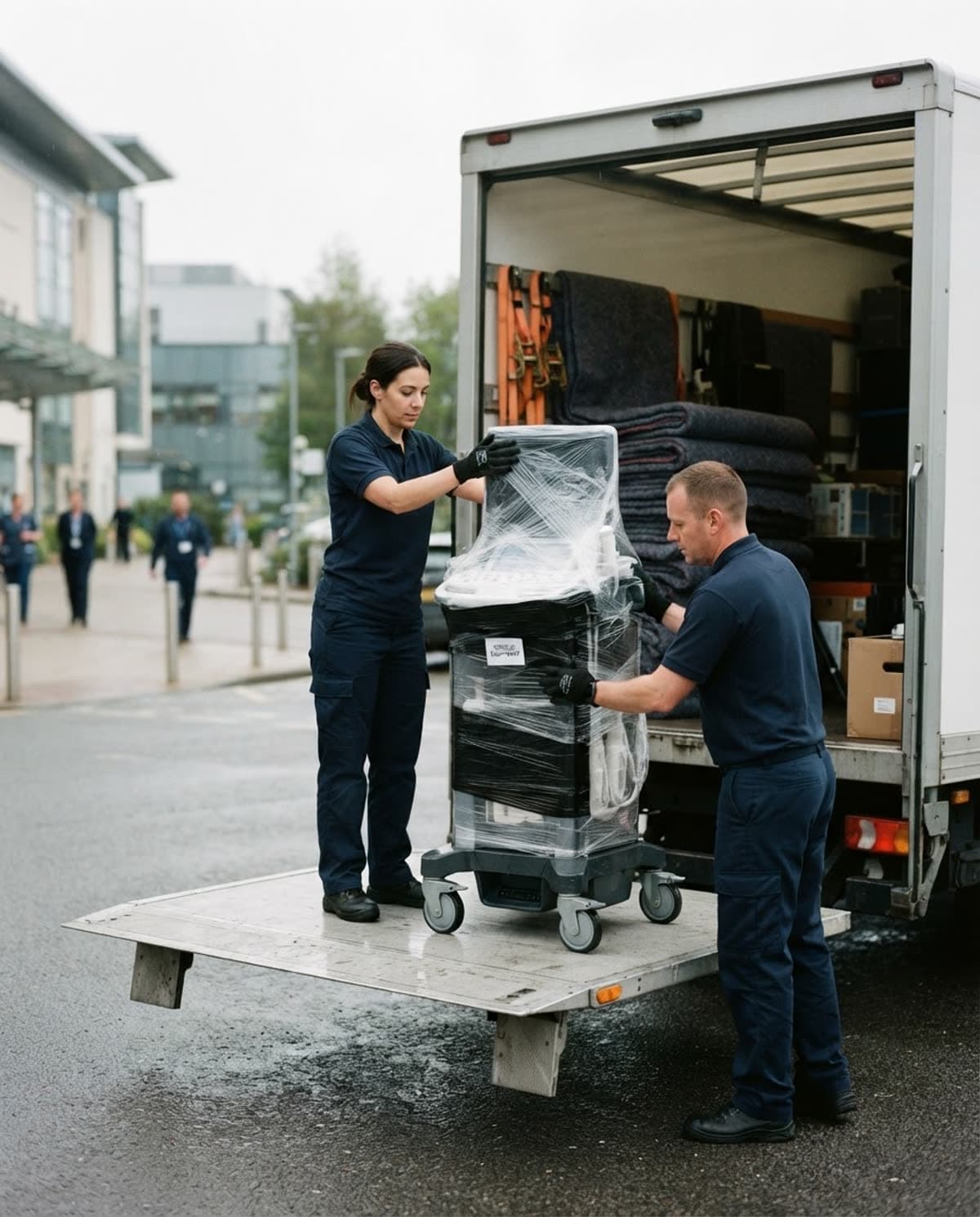
Wrapped, kept on its own wheeled base until it reaches the tail lift, then strapped down inside. Two people, because one person doing this is how backs and bezels get broken.
Relocations and lift-and-shift
Moving a clinic, ward or department
Relocating a working clinical space is a different job from delivering an item. The vehicle is rarely the constraint. The constraint is the survey, the access permissions, the order things come apart in and the window you have to do it in without stopping clinical activity.
1. Survey first
Door and corridor widths, lift car size and weight limit, floor loadings, thresholds, and how close the vehicle can get. Measured, not estimated. This is where a move goes wrong or does not.
2. Sequence and window
What comes out first, what has to be last in, and which items cannot be down at the same time. Most clinical moves run out of hours or across a weekend for exactly this reason.
3. Who does what
We move, position and level. We do not disconnect or recommission anything that needs a manufacturer engineer. Agreeing that boundary in advance stops the day stalling in a corridor.
4. Old kit out
Equipment being replaced leaves on the same visit where you want it to. Cheaper than a second job, and it keeps a decommissioned bed out of the corridor for a fortnight.
Planning the move yourself?
Our planning guide covers what to measure, what goods-in-transit cover actually excludes, who is allowed to disconnect what, and the lifting rules people usually get wrong. Free to read whether you book with us or not.
How it works
From booking to delivery, fully managed
A clear workflow with proof of every step, from quote to signed POD.
01
Submit your booking
Tell us pickup, delivery, item details and preferred date. Two minutes, no account needed.
02
Receive your quote
We confirm pricing and capacity between 2 hours and 1 working day. Emergency requests answered immediately.
03
Schedule & dispatch
Pick a slot, get a driver allocated, day-before reminder, real-time tracking on the day.
04
Delivered & documented
Signed POD, delivery photos, equipment-handover protocol, full audit trail emailed to you.
Chain of custody
Documented from pickup to handover
Every shipment is photographed, secured, signed for and audited. Standard for calibrated, sterile and high-value equipment, and standard for us.
- Pre-pickup condition photos & serials logged
- Signed handover document at pickup
- Air-ride / tail-lift / climate-control as required
- Real-time GPS location during transit
- Inside delivery, positioning & sign-off
- POD pack emailed within the hour
Common questions
What people ask before booking
Straight answers, including the ones where the answer is that we do not do it.
- What counts as medical equipment transport?
- Anything a general courier network is not built to carry: calibrated diagnostic equipment, imaging systems, hospital beds and couches, dental chairs, laboratory analysers, sterilisers and autoclaves. The distinguishing feature is not weight but consequence. A parcel network optimises for throughput, so an item is sorted, tipped and stacked several times between collection and delivery. Equipment that has to arrive in calibration cannot go through that.
- Why not just use a normal courier or man-and-van?
- Three reasons, in order of how often they cause trouble. First, handling: parcel networks conveyor and tip items, and a two-person lift is not available. Second, insurance: standard goods-in-transit cover is usually capped per consignment at a level well below a single ultrasound machine, and equipment is often an excluded category outright. Third, delivery point: a courier delivers to the kerb or the first door. Equipment usually needs to reach a specific room on a specific floor, positioned and left level.
- How is equipment secured in the vehicle?
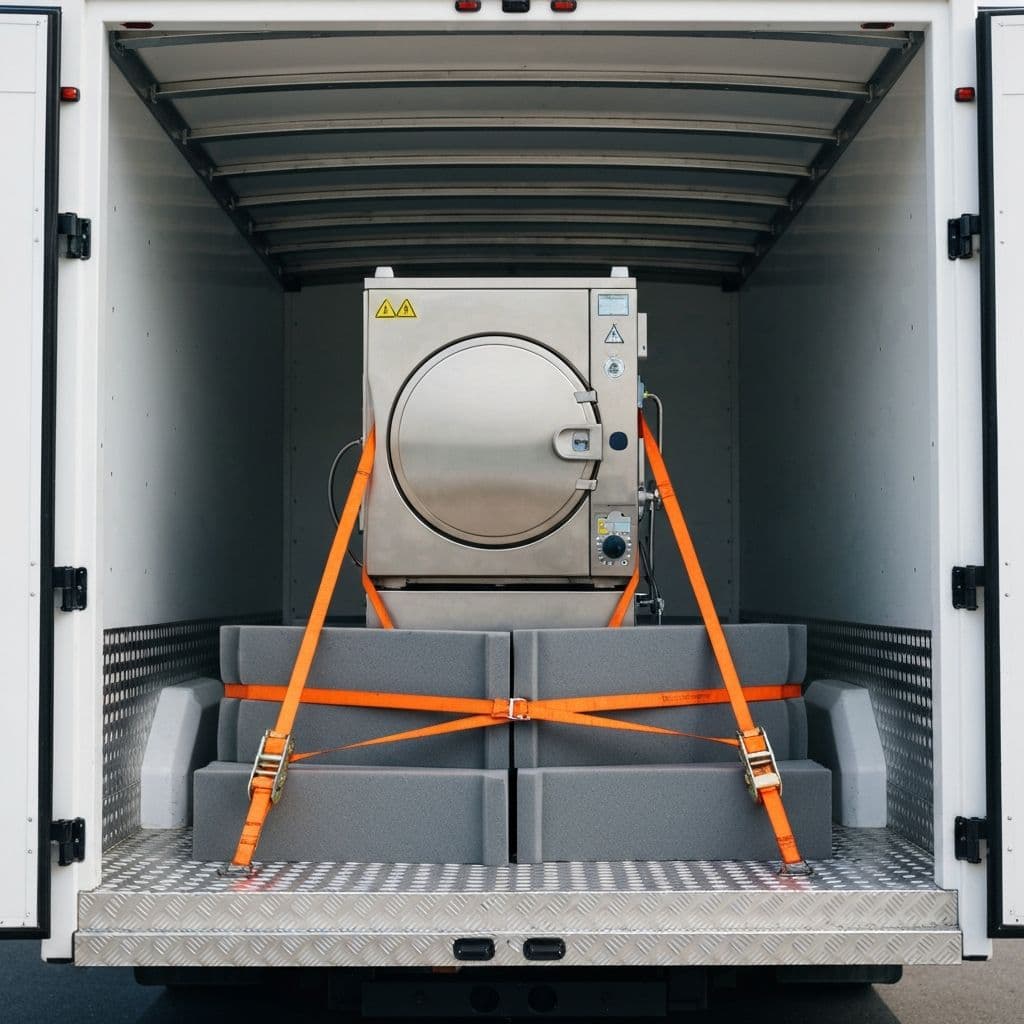
- Load restraint is the part of the job that decides whether anything arrives intact. Items are placed on foam blocks or a pallet so the load is not resting on castors, then restrained with ratchet straps to rated lashing points, cross-braced so the item cannot walk under braking. Load bars stop lateral movement in a part-loaded body. Soft edges take moving blankets so straps do not mark panels. Nothing travels standing on its own wheels.
- Do you move equipment inside the building, or just to the door?
- Inside delivery and positioning is standard on Specialist and On-Demand bookings, and available on Standard by arrangement. That means the crew take the item to the room, position it, level it where levelling applies, and remove the packaging and pallet if you want it gone. We ask about lift dimensions, door widths and floor protection before the day rather than discovering them on arrival.
- What is a site survey and when do I need one?
- A site survey is us establishing the route the item has to travel before committing to a date. It covers door and corridor widths, lift car dimensions and weight limit, floor loadings, thresholds and steps, parking and how far the vehicle can get from the entrance. For a single trolley-mounted item a phone call covers it. For anything that will not fit in a passenger lift, or any full room or department move, it should be done properly and in person.
- Can you transport temperature-sensitive items?
- Yes, with temperature-controlled vehicles for reagents, samples and equipment that must stay within a stated band. Tell us the band at the point of booking rather than afterwards, because it changes the vehicle and sometimes the route. If the item is a diagnostic sample rather than equipment, the packaging is regulated separately under UN3373 and we can advise on that too.
- What paperwork do I get?
- Condition photographs and serial numbers logged before the item is loaded, a signed handover document at collection, GPS location during transit, and a proof of delivery pack with photographs and a signature emailed after handover. If the equipment is going back into service under a quality system, that pack is the evidence trail your auditor will ask for.
- How much notice do you need?
- Standard bookings run on two to five working days, Specialist on one to three, and On-Demand same or next day. Emergency requests are answered immediately by the on-call dispatcher rather than queued. For a department relocation, start the conversation weeks out: the constraint is almost never the vehicle, it is the survey, the access permissions and the decommissioning.
- Is the equipment insured while you have it?
- Goods-in-transit insurance applies to every booking, with higher cover available on Specialist and On-Demand where the value warrants it. Tell us the replacement value at the point of booking. Declaring it afterwards, when something has already gone wrong, is not a position you want to be in.
- Do you cover the whole of the UK?
- Yes, England, Scotland, Wales and Northern Ireland. Longer routes may run overnight with a secure stopover rather than being pushed into a single shift, which is a deliberate choice: a tired crew doing a two-person lift at the end of a long drive is where injuries and damage happen.
- Can you move a whole clinic or department?
- Yes. A relocation is a different job from a delivery: it needs a survey, a sequence, an agreed order of decommissioning and recommissioning, and usually a plan that works around clinical activity or fits into a weekend. What we do not do is disconnect or reconnect anything that requires a manufacturer engineer. We work alongside those engineers rather than in place of them.
- What happens to the old equipment being replaced?
- We can remove it in the same visit, which is usually cheaper than a second job and avoids a decommissioned item sitting in a corridor. Where it is being redeployed elsewhere it travels under the same handling protocol as a new item. Where it is going for disposal, that is a separate regulated route and we will tell you plainly if it falls outside what we handle.
Ready when you are
Get a transport quote in two minutes
No account required. Tell us what you're moving and where, and we'll come back with pricing, a crew and a slot.