Face Mask Types Explained: Type I, Type IIR, FFP2 and FFP3
The difference between surgical masks and respirators — what Type I, Type II, Type IIR, FFP2 and FFP3 actually mean, and which to use for each clinical task.
Masks and respirators are not the same product and are not tested to the same standard. A surgical mask protects the patient from the wearer; a respirator protects the wearer from the environment. Buying the wrong one is a compliance problem as well as a safety one.
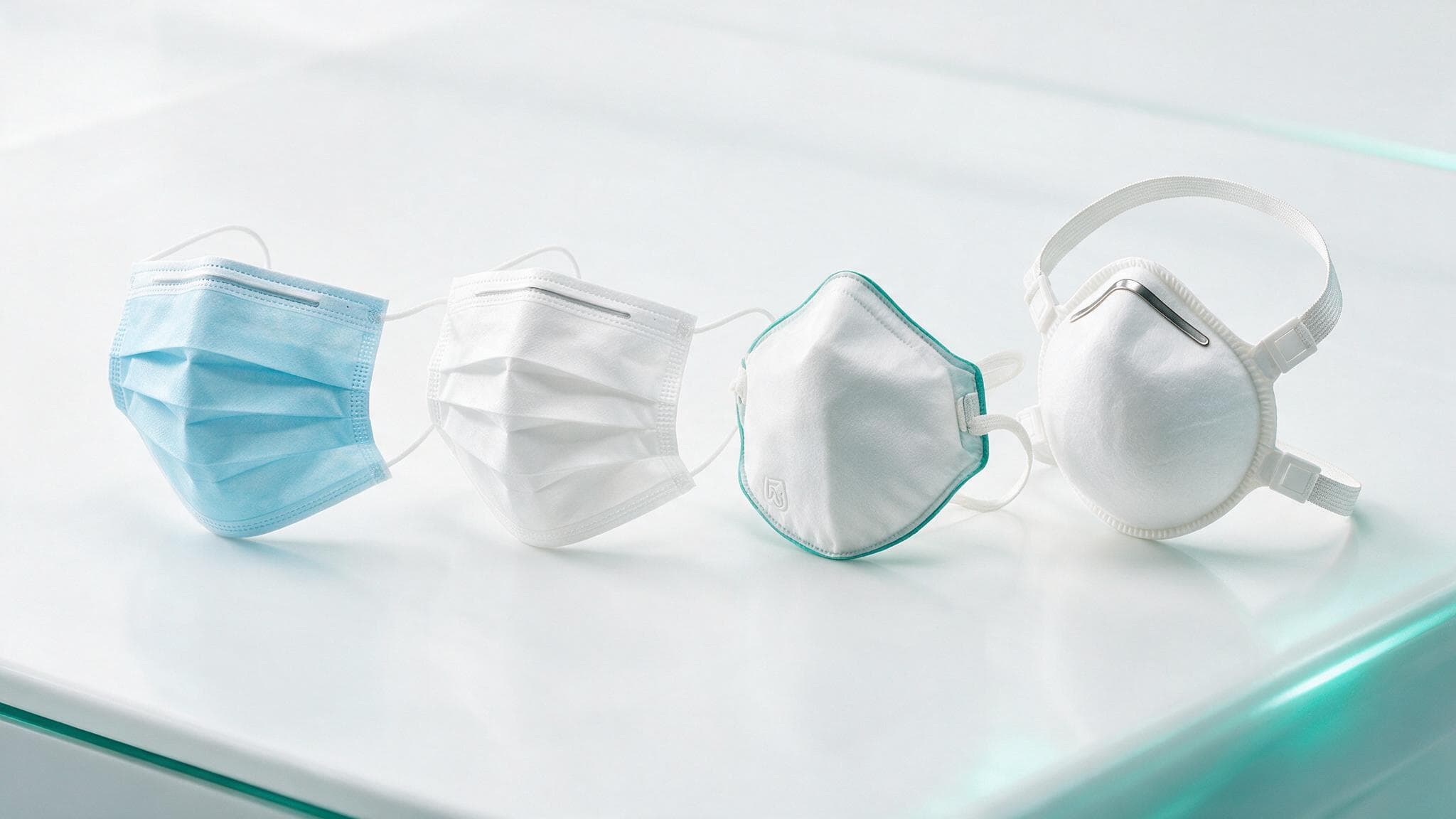
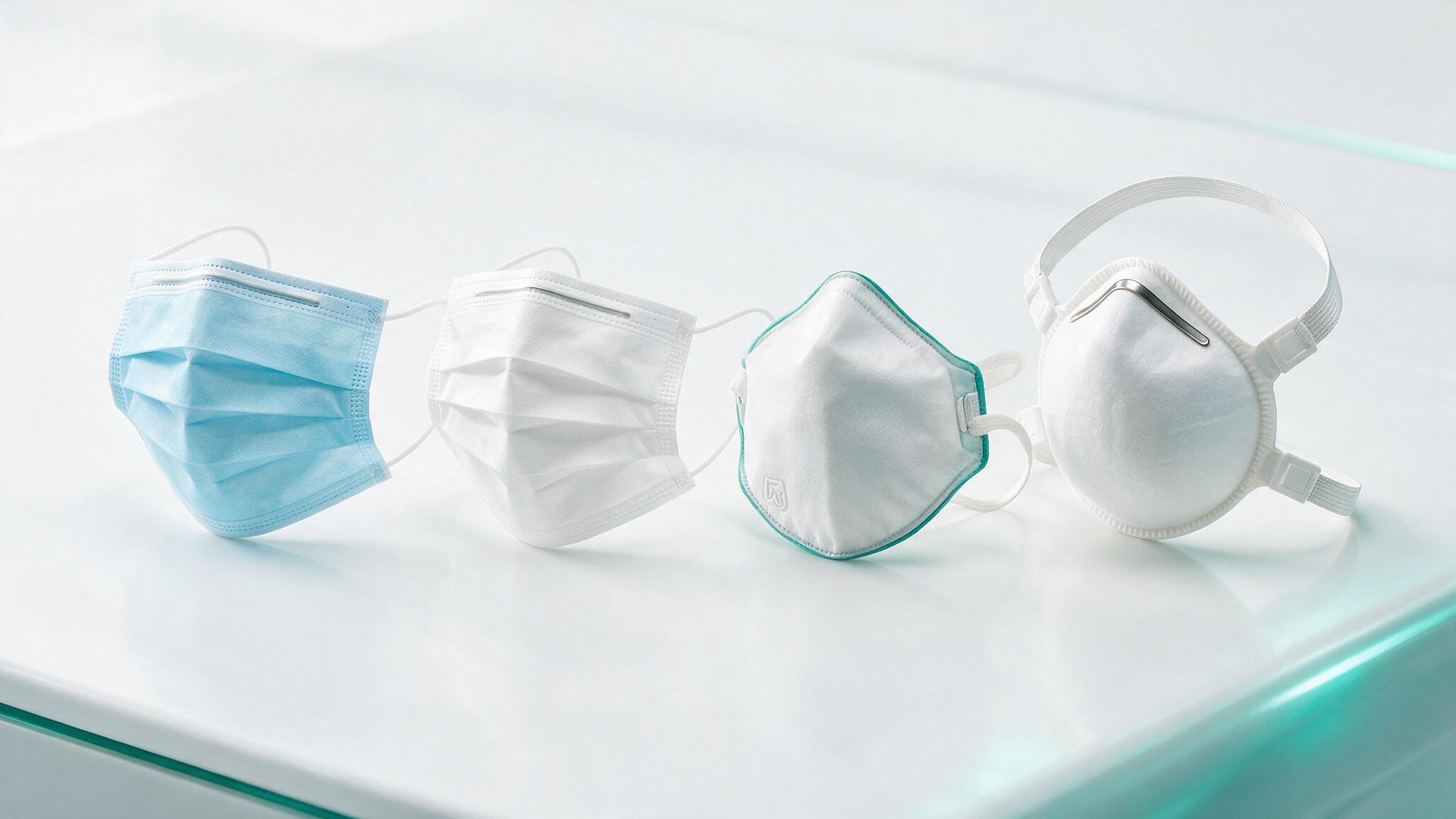
Pleated surgical masks alongside a cup-shaped respirator
Surgical masks — BS EN 14683
Medical face masks are tested to BS EN 14683 and graded by bacterial filtration efficiency and, for R types, resistance to splash.
Type
Bacterial filtration
Splash resistant
Typical use
Type I
≥ 95%
No
Patients and visitors, low-risk settings
Type II
≥ 98%
No
Clinical use without splash risk
Type IIR
≥ 98%
Yes
Clinical use where splash is possible
The R suffix is the important part for most clinical buyers. It denotes resistance to splash of blood or bodily fluid, which is why Type IIR is the default for procedural work.
Respirators — BS EN 149
Filtering facepiece respirators are tested to BS EN 149 and classified by how much airborne particulate they filter. Unlike a surgical mask, a respirator is designed to seal to the face, which is why fit matters so much.
Class
Minimum filtration
Typical use
FFP1
80%
Non-toxic nuisance dust
FFP2
94%
Airborne pathogens, moderate exposure
FFP3
99%
High-risk aerosol generating procedures
Different mask constructions shown side by side, including a headband respirator
Fit testing
A respirator only performs to its rating if it seals. Under UK health and safety guidance, staff who rely on tight-fitting respiratory protective equipment should be fit tested for the specific make and model they will wear, and should fit check every time they put one on. Facial hair at the seal line defeats both.
An FFP3 that does not seal offers less protection than a well-fitted Type IIR — and gives the wearer false confidence.
OMS Clinical Team
Choosing in practice
Identify whether you are protecting the patient, the wearer, or both
Where splash is foreseeable, specify Type IIR as a minimum
For aerosol generating procedures, follow local IPC policy — usually FFP3
Stock more than one respirator model so fit testing can accommodate different face shapes
Check every product is CE or UKCA marked to the correct standard
···
Optimised Medical Supplies stocks Type I, Type II and Type IIR masks and FFP2 and FFP3 respirators, all CE or UKCA marked. Order before 4pm for next-day dispatch on stocked lines.
Frequently asked questions
What is the difference between Type II and Type IIR masks?
Both filter at least 98% of bacteria. The R suffix denotes resistance to splash of blood or bodily fluid, which is why Type IIR is the usual choice for procedural clinical work.
Is an FFP3 respirator better than a Type IIR mask?
They do different jobs. A Type IIR surgical mask mainly protects the patient from the wearer; an FFP3 respirator protects the wearer from airborne particulate. An FFP3 only performs to its rating if it seals to the face.
Do staff need fit testing for respirators?
Yes. Anyone relying on a tight-fitting respirator should be fit tested for the specific make and model, and should fit check each time they put one on. Facial hair at the seal line prevents an effective seal.