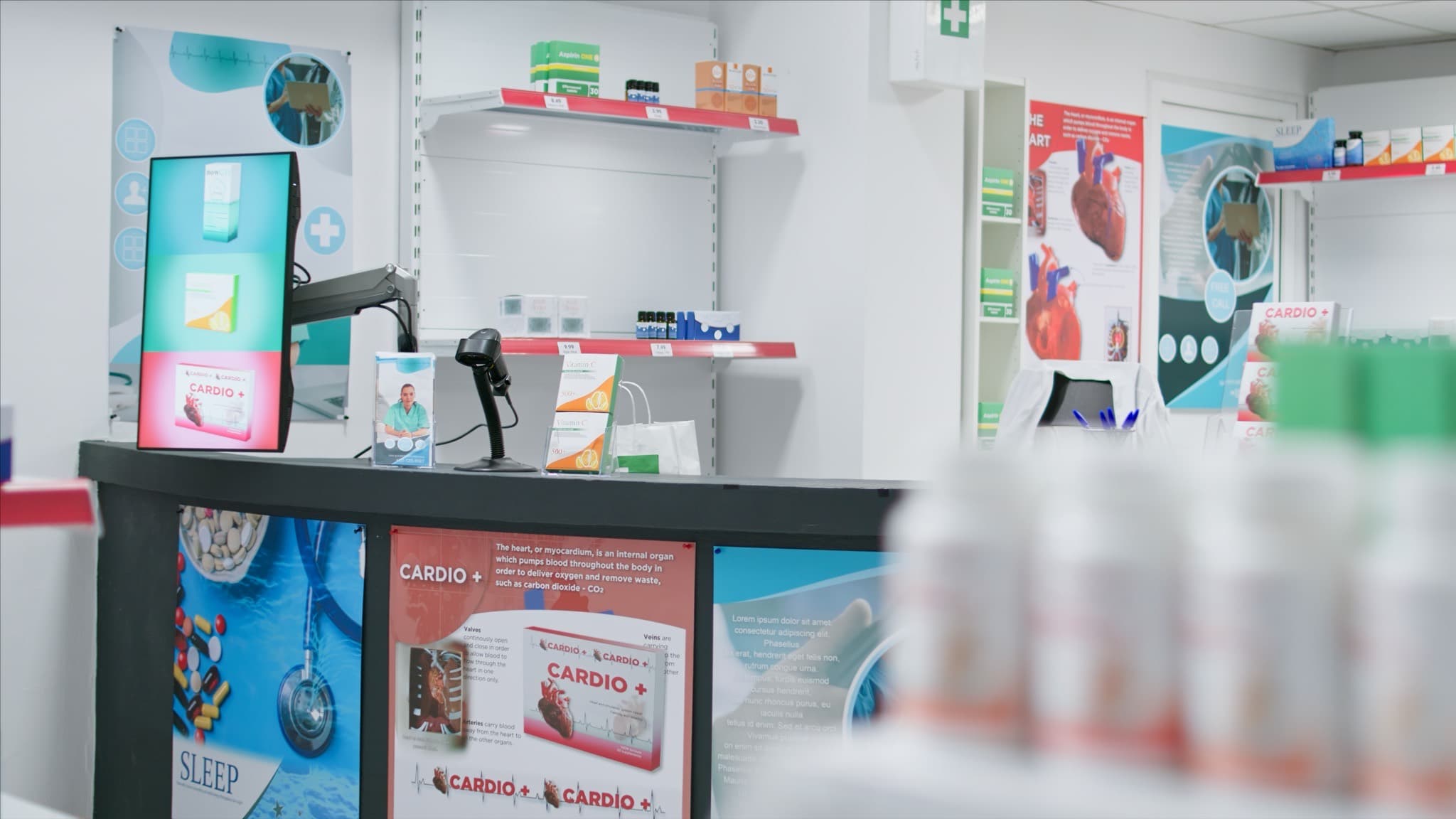
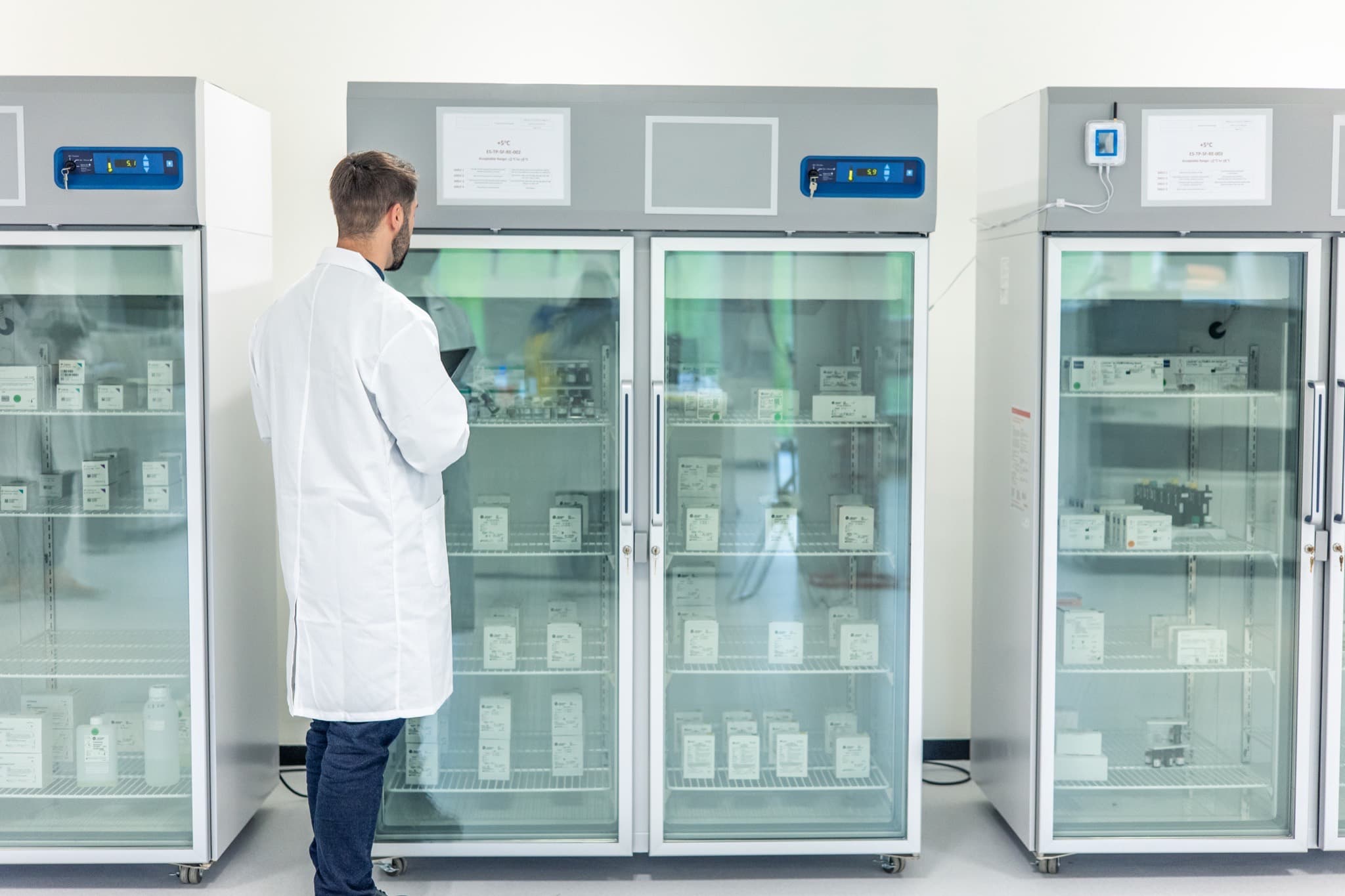
Cold storage gets bought by capacity and temperature, and then quietly asked to do jobs it was never built for. A pharmacy fridge ends up holding a blood sample. A laboratory fridge ends up holding a bottle of solvent. Nothing looks wrong until an inspection, a recall or an ignition shows otherwise.
The useful question is not how cold a unit gets. It is what the unit is allowed to hold. This guide works through the four jobs clinical and laboratory cold storage actually does, and what each one requires. How to monitor and record temperatures once the unit is installed is covered separately in our guide to pharmacy fridges and cold chain monitoring.
Four jobs, four different units
Medicines and vaccines: a pharmaceutical fridge holding +2 to +8 C, used for nothing else
Samples and reagents: a laboratory fridge, kept apart from anything a patient will receive
Anything flammable that needs cooling: a spark-free or explosion-proof unit
Long-term biological material: a freezer matched to the temperature the material needs, often -80 C
Most of the expensive errors in this area are a single unit trying to cover two of those lines. The rules for each one exist for different reasons, and they do not overlap.
Medicines and vaccines: the pharmaceutical fridge is the rule
For vaccines the position in England is set out in the Green Book, Chapter 3, which is unusually direct about it. Specialised pharmaceutical refrigerators must be used for vaccines and diluents, and in its own words: "Ordinary domestic refrigerators must not be used."
The same chapter says vaccines should be kept at +2 C to +8 C and protected from light, with enough space left around the packages for air to circulate. It also says food, drink and clinical specimens must never be stored in the same refrigerator as vaccines, and that door opening should be kept to a minimum to hold a constant temperature.
That last point explains most of what separates a pharmaceutical fridge from a domestic one. A domestic fridge is designed for food that tolerates a wide swing. A pharmaceutical fridge is designed to recover quickly after the door opens, to spread cold evenly rather than leaving warm and freezing zones, and to show the temperature without anyone needing to open it.
A controlled range around +2 to +8 C, with the temperature readable from outside
Even air circulation, so the shelf by the back wall is not colder than the door
A lock, because medicines are not a fridge anyone should be able to open
An alarm or a data logging option for when the temperature leaves range
Shelving that keeps stock off the back and floor of the cabinet
Glass door or solid door
A glass door lets staff check stock without opening the fridge, which supports the Green Book point about keeping door opening to a minimum. The trade-off is light. Because vaccines must be protected from light, stock in a glass-door fridge should stay in its original cartons.
A solid door holds temperature better when it is opened and keeps light out entirely, at the cost of having to open it to see what is inside. In practice glass suits high-turnover clinics where staff reach for stock often, and solid suits stores where the fridge is opened less and the priority is stability.
Samples and reagents: the laboratory fridge
A laboratory fridge does a different job. It holds specimens, reagents and kits that need to stay cold but will never be administered to anyone. The requirements are about sample integrity and separation rather than medicines regulation, and the most important one is simply that it is not the same unit as the medicines fridge.
Dedicated neonatal fridges exist for a related reason. Expressed breast milk is kept cold in its own unit, apart from medicines, which is consistent with the Green Book point that food and drink do not belong in a vaccine fridge.
This is the category where the wrong fridge is dangerous rather than merely non-compliant. The inside of an ordinary fridge contains electrical components that can spark: thermostat contacts, a light switch, sometimes a fan. It is also a closed box. A loosely capped bottle of solvent can fill that box with vapour, and the next time the thermostat clicks the vapour has an ignition source sitting right next to it.
The legal duty behind this is DSEAR, the Dangerous Substances and Explosive Atmospheres Regulations. As HSE describes it, employers must find out what dangerous substances are in the workplace and what the risks are, put controls in place to remove those risks or control them, and identify areas where explosive atmospheres may occur and avoid ignition sources. HSE lists solvents among the substances it covers.
Two kinds of unit answer that duty, and they are not the same thing.
Spark-free: the ignition sources inside the cabinet are removed, so flammable vapour from what is stored inside has nothing to ignite. This is the answer to storing flammables in the fridge.
Explosion-proof or ATEX-certified: the whole unit, including its external electrics, is certified to stand in an area where the surrounding atmosphere itself may be explosive. This is the answer to where the fridge is placed.
Many spark-free laboratory fridges also carry an ATEX certification for a particular zone. What matters is that the certification matches the zone your DSEAR assessment has actually set for the room. A spark-free fridge is right for a normal laboratory storing solvents; a hazardous-area classification needs the certified unit the assessment names.
Freezers: match the temperature to the material
Freezers are chosen by what the material needs over the time it will be stored, and the tiers do different jobs.
-20 C: common reagents, enzymes and short-term storage
-40 C to -60 C: a middle tier for material that degrades at -20 C but does not need ultra-low storage
-80 C to -86 C (ultra-low): long-term storage of DNA, RNA, proteins, cell lines, tissue and serum
An ultra-low freezer is a larger commitment than its footprint suggests. It rejects a lot of heat into the room, it needs a reliable power supply and an alarm that reaches someone out of hours, and the contents are usually far more valuable than the freezer. Before buying one, it is worth confirming that the material genuinely needs -80 C; plenty of stock sits there only because that is where space was found.
Chest freezers hold temperature better when opened, because cold air sinks and stays in the cabinet. Upright freezers are easier to organise and reach into, which matters when stock is retrieved often. The right choice follows how the freezer will be used, not just what fits the room.
Sizing for the stock you will actually hold
Buy for the busiest point of the year rather than the average. A clinic that runs a flu programme needs capacity for that peak, and the Green Book requirement to leave space around packages means a fridge that is full to the walls is already too small.
Large units are also a delivery question. A 1,300 or 1,400 litre pharmacy fridge or an ultra-low freezer needs door widths, lift access and a clear route to its final position confirmed before it ships. Our guides to transporting medical equipment and UK supply chain lead times cover the planning side.
The mistakes that recur
Using a domestic fridge for vaccines, which the Green Book rules out
Keeping specimens, food or drink in the vaccine fridge
Taking vaccines out of their cartons in a glass-door fridge, leaving them exposed to light
Storing solvents in an ordinary laboratory fridge because it is the only cold space
Buying an explosion-proof unit for a room that only needed spark-free, or the reverse
Putting everything at -80 C by default and running out of space for material that truly needs it
Sizing a pharmacy fridge for the average month instead of the busiest one
We supply pharmacy fridges from compact units to 1,400 litres in glass and solid door, laboratory and neonatal fridges, a spark-free laboratory fridge, and -20, -40 and ultra-low -80 and -86 C freezers. Browse the range in Laboratory Supplies, or tell us what the unit needs to hold and we will point you at the right one.
Frequently asked questions
Can vaccines be stored in a normal domestic fridge?
No. The Green Book, Chapter 3, says specialised pharmaceutical refrigerators must be used for vaccines and diluents and that ordinary domestic refrigerators must not be used. Vaccines should be kept at +2 C to +8 C and protected from light.
Can food or specimens go in the vaccine fridge?
No. The Green Book says food, drink and clinical specimens must never be stored in the same refrigerator as vaccines. If a department needs to keep specimens cold, that needs a separate unit.
Is a glass-door or solid-door pharmacy fridge better?
It depends on use. Glass lets staff see stock without opening the door, which reduces door opening, but vaccines must stay in their cartons to be protected from light. Solid doors hold temperature better on opening and keep light out, but have to be opened to check stock.
What is the difference between a spark-free and an explosion-proof fridge?
A spark-free fridge has the ignition sources removed from inside the cabinet, so vapour from flammables stored inside has nothing to ignite. An explosion-proof or ATEX-certified unit is certified to stand in an area where the surrounding atmosphere may itself be explosive. Many spark-free units carry an ATEX zone certification, and it should match the zone your DSEAR assessment sets.
Can I keep solvents in an ordinary laboratory fridge?
No. An ordinary fridge has electrical components inside that can spark, in a closed space where solvent vapour collects. DSEAR requires employers to control the risks from dangerous substances such as solvents and to avoid ignition sources, so flammables that need cooling belong in a spark-free unit.
Do I need a -20, -40 or -80 C freezer?
Match it to the material. -20 C suits common reagents, enzymes and short-term storage. -40 to -60 C suits material that degrades at -20 C but does not need ultra-low storage. -80 to -86 C is for long-term storage of DNA, RNA, proteins, cell lines, tissue and serum.
Chest or upright ultra-low freezer?
Chest freezers hold temperature better when opened because cold air sinks and stays in the cabinet. Upright freezers are easier to organise and reach into, which suits stock retrieved often.
Size it for your busiest period, such as a flu programme, not the average month. The Green Book asks for space around vaccine packages for air to circulate, so a fridge packed to the walls is already too small.