PPE Dispensers: Getting Gloves, Aprons and Hand Rub Within Reach
Training people to use PPE does not help much if the box is in another room. Compliance is usually a placement problem wearing a training problem's clothes.
Dispensers look like the least interesting thing you can buy. They are also, more often than not, what decides whether the protocol on the wall is the protocol in the room.
If gloves are in a cupboard, someone will do the quick job without them. If the hand rub is by the door rather than by the chair, it gets used on the way in and not between patients. None of that is a knowledge problem, and no amount of retraining fixes it.
Placement is the intervention
This is not just a supplier's opinion. The World Health Organization's multimodal hand hygiene improvement strategy treats making alcohol-based handrub available at the point of care as system change, and the point of care means where the patient is, not where the sink is.
The literature makes the same point from the other direction: training staff to recognise hand hygiene opportunities may not improve adherence where the dispensers or sinks are not easily accessible in the workflow, or are not working. If you have run the training and the audit has not moved, the next thing to look at is where the dispensers are.
The same logic applies to gloves, aprons and the bin the used ones go into. Every extra step between the task and the item is a step somebody skips when a room is busy.
Gloves: box holders and how many
A glove box dispenser holds the box open, keeps it off a contaminated surface and stops it being knocked to the floor. Single, double and triple holders exist because most rooms need more than one size available at once, and the commonest failure is having only mediums on the wall so anyone with larger or smaller hands goes to the cupboard or makes do.
Site them where the gloves are put on, which is usually near the couch or the chair rather than by the door. Wall mounting is better than a shelf: a box on a worktop ends up next to whatever else is on that worktop.
Triple holders where more than one size is genuinely used in the room
Wall mounted at the point of use, not at the entrance
At a height where a shorter member of staff can reach the top box
Away from splash zones, since a box of gloves that gets wet is a wasted box
Aprons and the sack next to them
Aprons come on a roll or flat packed, and the dispenser has to match. Roll dispensers dispense one at a time and stop the roll unspooling across the floor. Flat pack dispensers suit boxed aprons and take less depth.
The item worth pairing them with is a sack holder or a combined apron and sack dispenser. An apron comes off at the end of a task and has to go somewhere immediately. If the somewhere is across the room, it goes on a surface first, which is the moment cross-contamination happens. Putting the disposal point next to the donning point is a small change that removes the problem.
Hand hygiene: elbow-operated and why
An elbow-operated dispenser exists for a specific reason. You are usually operating it with hands that are contaminated, so a push button gets contaminated too, and the next person touches it before they have washed. An elbow or forearm lever breaks that chain.
Stainless steel is worth the difference where it will be cleaned repeatedly with a disinfectant, since some plastics craze over time under the products an infection control policy specifies. Plastic is fine in lower-traffic areas and costs less.
Elbow-operated at sinks and anywhere hands are contaminated at the point of use
Stainless steel where cleaning is frequent and the product is aggressive
One at the point of care as well as one at the sink, not instead of
Refills that match the dispenser, checked before you commit to the fitting
Masks, wipes, couch roll and the rest
Mask dispensers matter most where masks are used intermittently, because a box left open on a side gets handled by everybody and the contents stop being clean. Wipe dispensers keep the pack sealed between uses, which matters more than it sounds: an alcohol wipe left open dries out, and a dry wipe does nothing.
Couch roll and hygiene roll holders are the most mundane item here and the one most often improvised. A roll on a windowsill unspools onto the floor and gets thrown away. A holder at the head of the couch is a few pounds and stops that happening several times a week.
Where there is no wall: mobile organisers
Not every setting can drill. Rented premises, listed buildings, domiciliary rounds and rooms that change use all need PPE at the point of care without a fixed fitting.
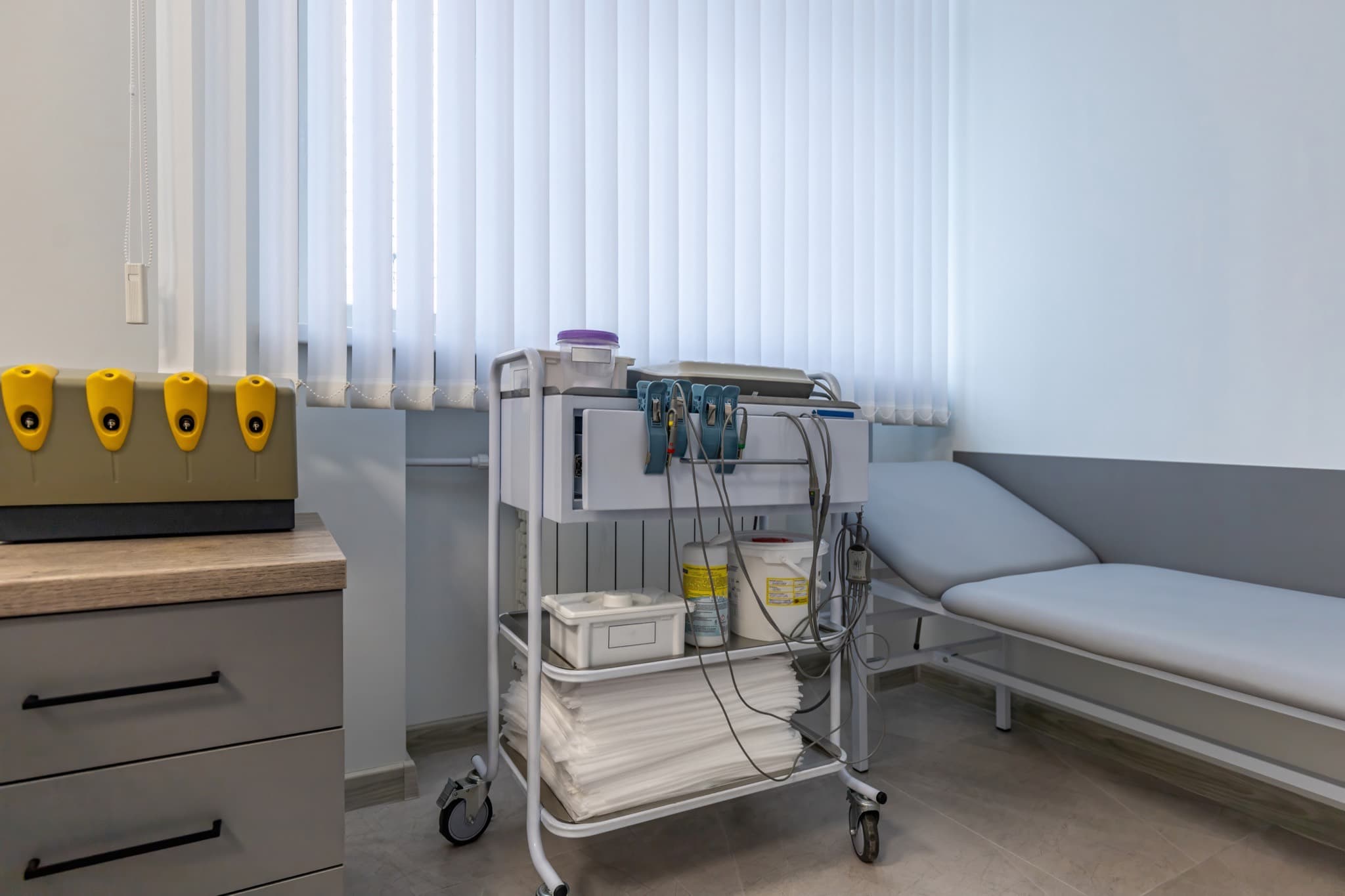
A mobile PPE organiser or trolley solves it by bringing the dispensers to the task rather than the other way round. The thing to check is that it is stable when loaded and that the wheels lock, because a trolley that rolls when leaned on is worse than a shelf. For domiciliary work a carry caddy does the same job at a smaller scale.
Siting: a few rules that hold up
Within arm's reach of where the task happens, not within sight of it
Donning point and disposal point next to each other, so the apron has somewhere to go
At a height that works for the shortest person using it
Away from splash, heat and direct sun, all of which shorten the life of what is inside
Not on the back of a door, which is the single most common bad placement
Where a wheelchair or a hoist can still get past, since access matters more
Materials and cleaning
Dispensers get cleaned as often as the surfaces around them, so check the material against the products in your own infection control policy rather than assuming. Some disinfectants degrade some plastics over time, and a crazed dispenser holds dirt in the cracks and has to be replaced anyway.
Stainless steel handles repeated disinfection well and costs more. Plastic is lighter, cheaper and easier to mount on plasterboard. Both are fine choices; the wrong choice is a material nobody checked against the cleaning regime.
What to specify
What it dispenses, and the pack format it has to take, since holders are not universal
Single, double or triple, based on how many sizes or types the room actually uses
Wall mounted or free standing, and what the wall is made of
Material, checked against the disinfectant your policy specifies
Elbow or forearm operation where hands will be contaminated at the point of use
Whether a matching sack holder or bin is going next to it
Does where I put a PPE dispenser actually change compliance?
Yes, and more than training does on its own. WHO's multimodal hand hygiene strategy treats making handrub available at the point of care as system change rather than education, and the literature is explicit that training staff to recognise hand hygiene opportunities may not improve adherence where dispensers or sinks are not accessible in the workflow or are not working. If an audit has not moved after training, look at placement next.
Why are soap dispensers elbow-operated?
Because you usually operate them with contaminated hands. A push button gets contaminated in the process, and the next person touches it before they have washed, which puts the contamination straight back into the chain. An elbow or forearm lever breaks that. It matters most at sinks and anywhere hands are dirty at the point of use.
Should glove dispensers be wall mounted or left on a worktop?
Wall mounted, at the point where gloves are put on, which is usually near the couch or chair rather than by the door. A box on a worktop ends up beside whatever else is on that worktop, gets knocked to the floor, and can be contaminated by splash. Mount at a height the shortest person using the room can reach.
How many glove sizes should be available in one room?
Enough that nobody has to go to a cupboard, which in most rooms means more than one. Triple holders exist for exactly this: if only mediums are on the wall, anyone with larger or smaller hands either walks away or makes do with a poor fit, and a glove that is too small tears at the thumb.
What should go next to an apron dispenser?
A sack holder or a bin. An apron comes off at the end of a task and has to go somewhere immediately, and if that somewhere is across the room it gets put on a surface first, which is when cross-contamination happens. Combined apron and sack dispensers exist for this reason. Put the disposal point next to the donning point.
What if I cannot drill into the walls?
Use a mobile PPE organiser or trolley, which brings the dispensers to the task instead. This is the normal answer for rented premises, listed buildings and rooms that change use. Check it is stable when fully loaded and that the wheels lock, since a trolley that moves when someone leans on it is worse than a fixed shelf. For domiciliary work, a carry caddy does the same job.
Should I buy plastic or stainless steel dispensers?
Check the material against the disinfectants your infection control policy actually specifies rather than assuming. Stainless steel handles repeated disinfection well and costs more, which suits high-traffic areas and sinks. Plastic is lighter, cheaper and easier to fit to plasterboard, and is fine in lower-traffic areas. The wrong choice is the one nobody checked against the cleaning regime.