How to Specify Clinical Seating and Examination Couches
A Crib 5 certificate belongs to the finished chair, not to the fabric on it. That single distinction is where most clinical seating specifications quietly fail.
Clinical seating is bought on price and remembered on cleaning. A chair that looked identical to the one next to it turns out to have stitched seams that trap fluid, castors that will not brake on vinyl flooring, or a fire certificate that covers the fabric and nothing else.
None of that is visible in a catalogue photograph. This guide covers what to ask for, in the order it tends to matter: fire, upholstery, movement, height and load. Cleaning and infection control are covered separately in our guide to infection control and vinyl cleaning for healthcare seating, so they are referenced here rather than repeated.
Crib 5 describes the whole chair, not the fabric
BS 5852 is the British Standard for the ignitability of upholstered seating. Ignition Source 5, universally shortened to Crib 5, is the wooden crib test used across UK contract environments including healthcare waiting areas and consulting rooms.
The test is run on a composite: cover fabric, foam, any interliner and any barrier cloth, assembled as they will be in the finished item. A wooden crib is placed on the sample and lit. The materials have to burn in a controlled way and self-extinguish.
This is where specifications fail. A flame-retardant fabric sitting on standard foam will usually fail the test, because the foam is what sustains the fire. A certificate that names only the fabric tells you nothing about the chair that fabric ended up on.
Crib 7 is the more severe test above it. It is normally reserved for high-risk premises such as secure psychiatric units, custodial settings and a small number of NHS estates. If a specification calls for Crib 7, Crib 5 will not satisfy it, and the two are not interchangeable regardless of what a product description implies.
Is Crib 5 actually a legal requirement?
Not in the way it is usually described. The Furniture and Furnishings (Fire) (Safety) Regulations 1988 govern domestic upholstered furniture. A clinical building sits under the Regulatory Reform (Fire Safety) Order 2005, which requires a suitable and sufficient fire risk assessment rather than naming a test.
In practice that assessment, together with the procurement specification and the insurer, is what calls for Crib 5. The distinction matters commercially. Nobody will prosecute you for the standard printed on a chair. What will happen is that a fire risk assessment finds untested seating in a corridor, and the item has to be replaced at your cost rather than at the point of purchase.
So treat it as a procurement requirement you set, not a box the supplier ticks on your behalf. Write it into the order.
Upholstery: the seam is the specification
Healthcare vinyl is chosen for what it survives rather than how it looks. The material needs to tolerate repeated contact with the disinfectants actually in use on the ward, which in most UK settings means chlorine-releasing agents at the concentrations set locally for blood and body fluid spills.
The more common failure is not the vinyl but the construction around it. Stitched seams put needle holes through the surface. Fluid travels through them, reaches the foam underneath, and the chair cannot be brought back by wiping. Welded or sealed seams keep the barrier continuous.
Ask whether seams are welded or stitched, and where any stitching sits relative to the seat pan
Check for crevices between the seat and the backrest, which is where spillage collects and cleaning cloths do not reach
Confirm the vinyl is rated for the disinfectant concentration your infection control policy specifies, not for a generic wipe
Ask what the foam is wrapped in, because a damaged cover on unprotected foam is a condemned chair
Colour is not purely cosmetic in clinical areas. Wards commonly use colour to separate seating by zone or by bay, which is easier to enforce when a range carries the same specification across several colourways rather than mixing suppliers to match a scheme.
Castors, glides and brakes
Castors decide whether a chair can be cleaned under and whether it stays where it was put. Both matter, and they pull in opposite directions.
Operator seating in a consulting room needs to move, so castors are correct. What varies is the castor itself: a soft-tread castor intended for hard floors will behave very differently on carpet or on cushioned safety flooring, and the wrong one either sticks or rolls away under load.
Patient seating generally should not roll. A waiting room chair on free castors is a fall risk when somebody uses it to push themselves upright. Glides, or braked castors that are actually braked, are the safer specification.
Hard floors and cushioned safety vinyl: soft-tread castors, braked on any seat a patient will use
Carpet: hard-tread castors, otherwise the chair will not move at all
Waiting areas and any seat used for transfers: glides or fully braked castors as standard
Anywhere a hoist or a wheelchair comes alongside: check the base does not foul the approach
Arms, and why they cut both ways
Arms help a patient push themselves up from a seated position, which is the single most useful thing a chair can do for somebody with limited strength. The same arms obstruct a lateral transfer and can make a hoist sling approach awkward.
There is no universally right answer, which is why most ranges offer both. The specification decision is about the room, not the chair. Waiting areas and day rooms benefit from arms. Seating placed where transfers happen usually should not have them, or should have a drop-down arm on at least one side.
Height: fixed, gas lift or hydraulic
Gas lift is the default for clinical stools and operator chairs, because the person using it adjusts it several times a day and needs to do that without leaving the seat. It is not appropriate for patient seating, where a seat that sinks under load is a hazard rather than a feature.
Patient seating wants a fixed, known seat height. Somebody who needs help standing has to be able to plant their feet, and that depends on a height that does not change between visits. Where a range offers a choice, a taller fixed seat height is generally easier to rise from than a lower one.
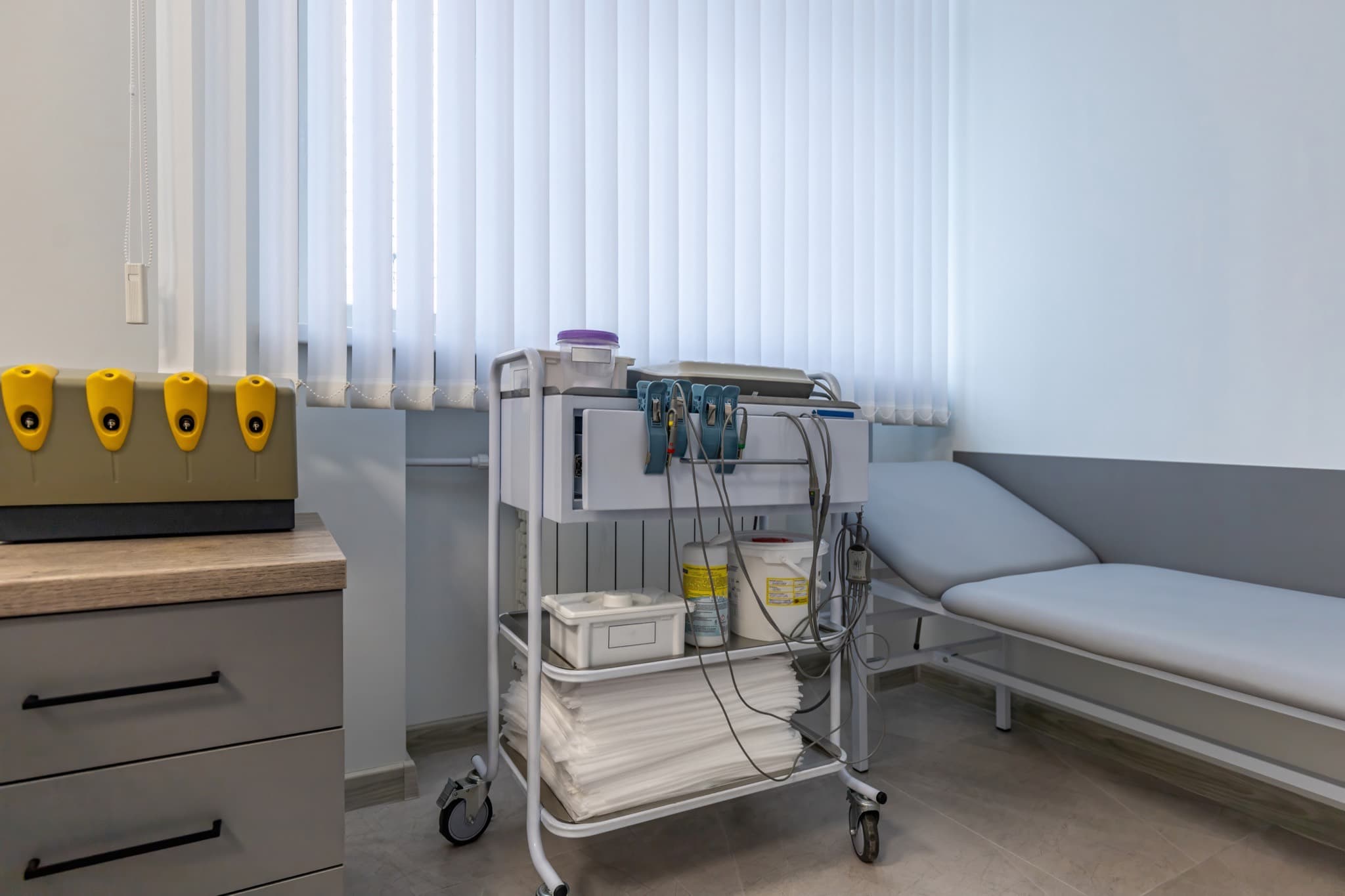
Hydraulic height adjustment appears on examination couches rather than chairs, and the question there is whether it is foot-operated. A clinician with gloved hands and a patient on the couch has no spare hand for a lever.
Weight capacity, and the number that is missing
Safe working load is the figure that should appear on every piece of clinical seating and frequently does not. Where a product does not state one, that is worth a question rather than an assumption, because an unstated capacity is not the same as a generous one.
Bariatric seating is a separate specification rather than a bigger version of the standard chair. The frame, the base and the foam density all change. A standard chair used beyond its rated load fails at the joint between the seat and the base, usually without warning.
Where a setting sees a wide range of patients, a small number of dedicated bariatric seats placed in the areas that need them is more useful than uprating the whole room.
What to settle before the order goes in
Clinical seating is bulky, and the parts of the transaction that go wrong are rarely about the chair itself. Our guide to UK medical supply chain cut-offs and lead times covers the timing side in more detail.
Lead time, which for upholstered items made to a colourway is measured in weeks rather than days
Whether the item arrives assembled, flat packed, or requires two people to handle
Delivery access: lifts, door widths and whether the delivery is to the door or to the room
Minimum order quantity, which on some ranges is set by the pack the manufacturer ships rather than by anything you need
What happens to the packaging, which on a bulk seating order is a genuine waste handling question
The mistakes that recur
Accepting a fabric fire certificate as evidence that the finished chair is compliant
Specifying Crib 5 where the fire risk assessment actually calls for Crib 7
Buying free-rolling castors for seating that patients will use to stand
Matching a colour scheme across two suppliers and ending up with two different fire specifications in one room
Ordering stitched-seam upholstery for an area that sees regular spillage
Assuming a chair without a stated safe working load is rated for whoever sits in it
We hold examination couches, gas lift clinical stools and waiting room seating across a range of colourways on the same specification. If you want the composite fire certificate for a particular item before you commit, ask and we will send it.
Frequently asked questions
Is Crib 5 a legal requirement for healthcare furniture?
Not directly. The Furniture and Furnishings (Fire) (Safety) Regulations 1988 apply to domestic upholstery. A clinical building falls under the Regulatory Reform (Fire Safety) Order 2005, which requires a fire risk assessment rather than naming a test. In practice that assessment, your procurement specification and your insurer are what call for Crib 5, so it is a requirement you set rather than one the supplier applies for you.
Does a Crib 5 fabric certificate mean the chair is Crib 5?
No, and this is the most common gap in a seating specification. BS 5852 Ignition Source 5 is tested on the finished composite: cover, foam, interliner and barrier cloth together. Flame-retardant fabric over standard foam will usually fail, because the foam sustains the fire. Ask whether the finished product has been tested as built.
What is the difference between Crib 5 and Crib 7?
They are different ignition sources in the same standard, and Crib 7 is considerably more severe. Crib 7 is normally specified for high-risk premises such as secure psychiatric units and custodial settings. Crib 5 does not satisfy a Crib 7 requirement.
Should clinical chairs have arms?
It depends on the room rather than the chair. Arms help somebody push themselves upright, which matters in waiting areas and day rooms. The same arms obstruct lateral transfers and hoist slings, so seating placed where transfers happen is usually better without them or with a drop-down arm on one side.
Castors or glides on patient seating?
Glides, or castors that genuinely brake. A chair on free castors will move when a patient pushes down on it to stand, which is a fall risk. Castors belong on operator seating that needs to move during a consultation.
Do castors need to match the flooring?
Yes. Soft-tread castors are intended for hard floors and cushioned safety vinyl. Hard-tread castors are for carpet. Fitting the wrong one leaves a chair that either will not move or will not stay still.
Why do welded seams matter on clinical upholstery?
Stitching puts needle holes through the vinyl. Fluid passes through them into the foam, and no amount of surface cleaning recovers the chair. Welded or sealed seams keep the barrier continuous, which is what makes the item cleanable rather than merely wipeable.
What safe working load should clinical seating have?
There is no single figure, but there should always be a stated one. Where a product does not publish a safe working load, treat that as a question rather than an assumption. Bariatric seating is a different construction throughout rather than a larger version of the standard chair.