Healthcare Seating and Infection Control: Vinyl, Cleaning and Compliance
Choosing clinical seating that survives daily disinfection — vinyl grades, seam construction, fire regulations and what to check before ordering waiting room chairs.
Clinical seating fails for one of two reasons: the upholstery cracks under repeated disinfection, or the construction traps contamination where it cannot be cleaned. Both are specification problems that are far cheaper to solve at the point of purchase than after two years of use.
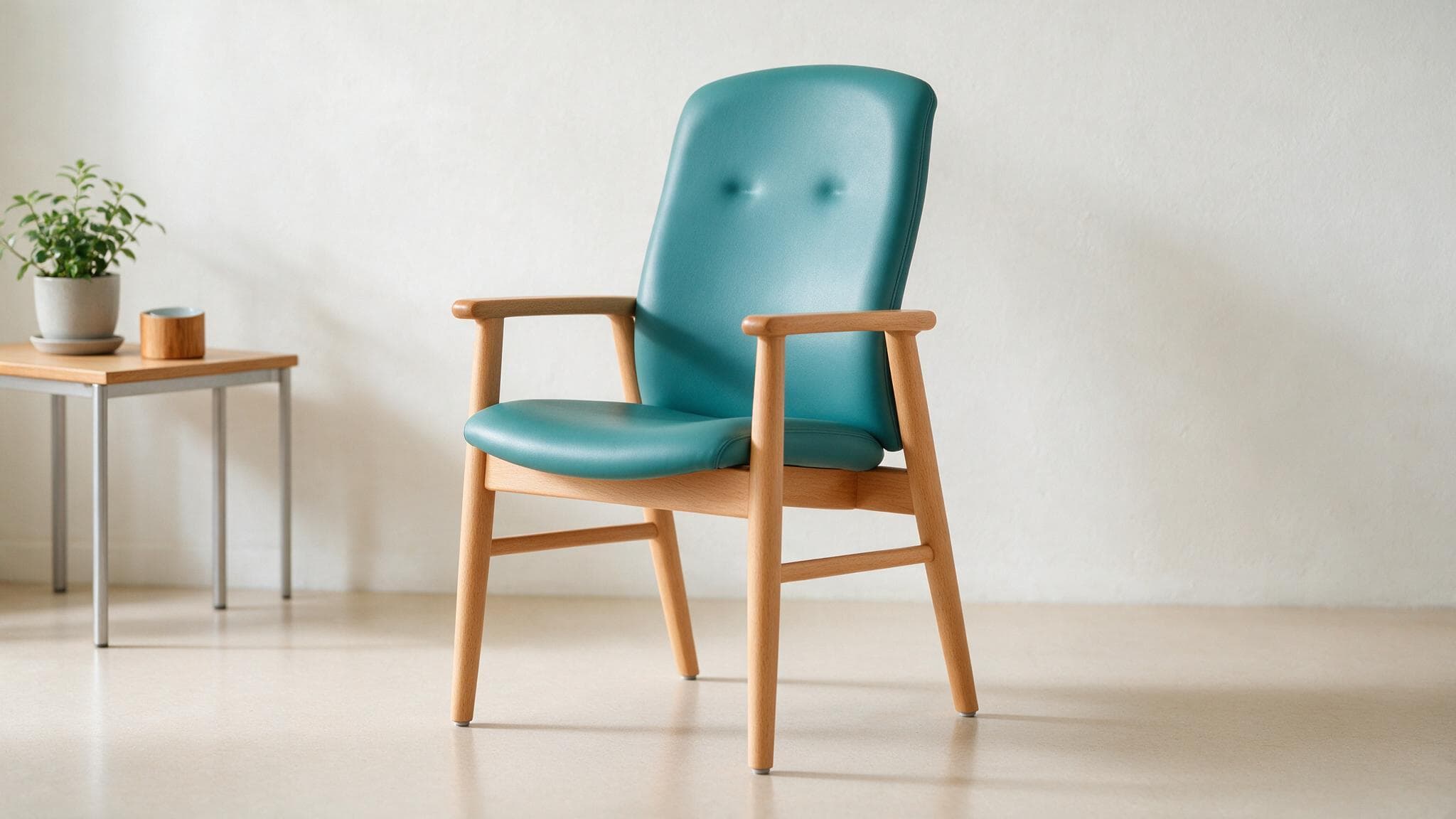
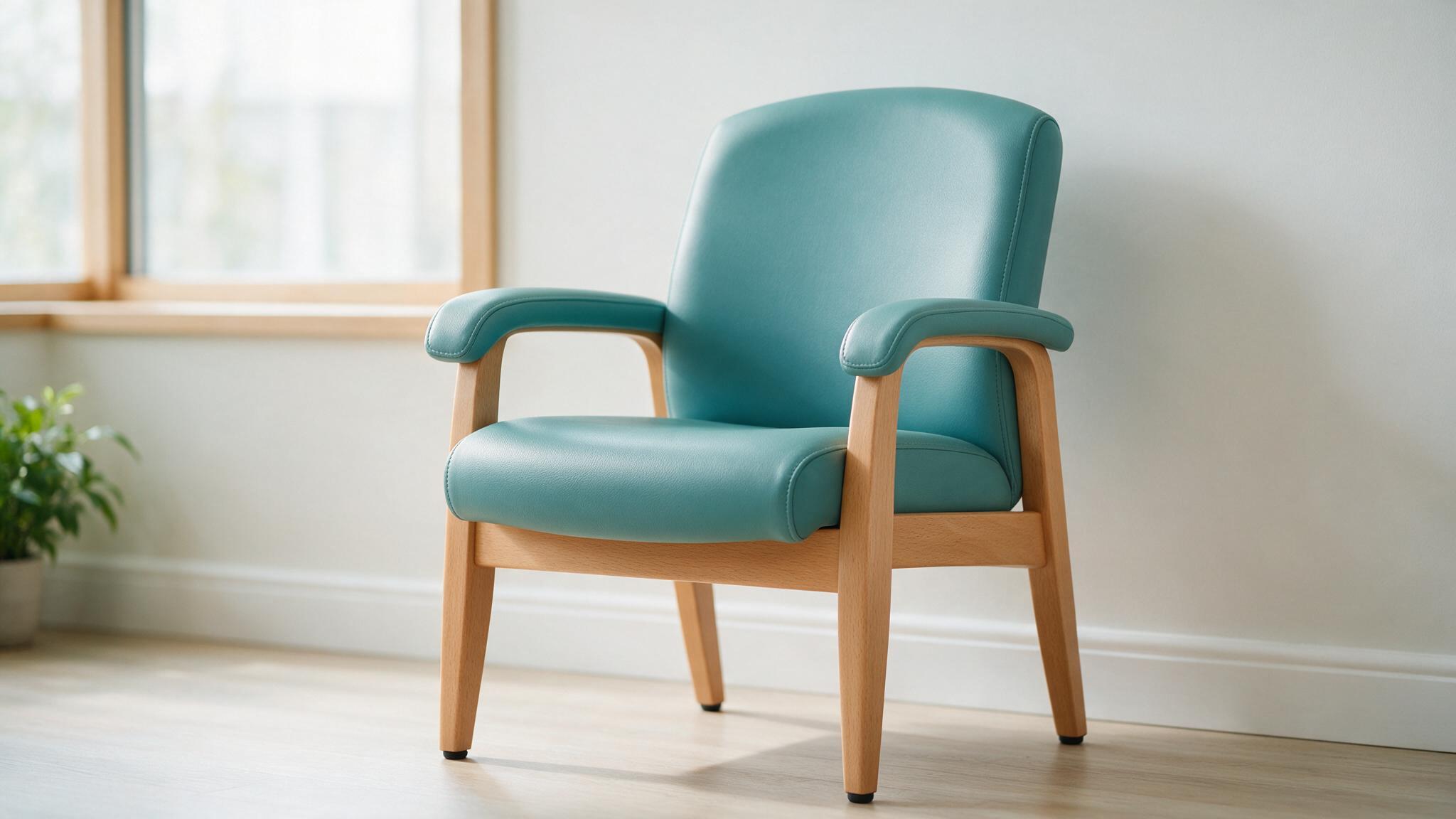
A wipe-clean vinyl clinical chair in a bright waiting area
Why vinyl, not fabric
Woven fabric absorbs spills and cannot be reliably disinfected between patients. Healthcare-grade vinyl is non-porous, wipes clean, and tolerates the chlorine-releasing agents used in clinical cleaning. The trade-off is that not all vinyls tolerate them equally.
Property
Why it matters
Anti-bacterial finish
Inhibits surface growth between cleans
Chlorine tolerance
Survives hypochlorite disinfection without cracking
Rub count
Predicts wear life in high-traffic waiting areas
Fire retardancy
Must meet UK contract furniture requirements
Moisture barrier backing
Stops fluid reaching the foam
Construction details that decide cleanability
A chair is only as cleanable as its worst seam. Look at how the upholstery is joined, whether the underside is sealed, and whether there are recesses that will collect debris.
Sealed or welded seams — stitched seams create a moisture path into the foam
Closed underside — an open base collects dust and is rarely cleaned
Gap between back and seat — a deliberate gap is easier to clean than a tight crevice
Removable seat pads — allow replacement rather than replacing the whole chair
Non-marking glides — protect flooring and avoid trapping debris
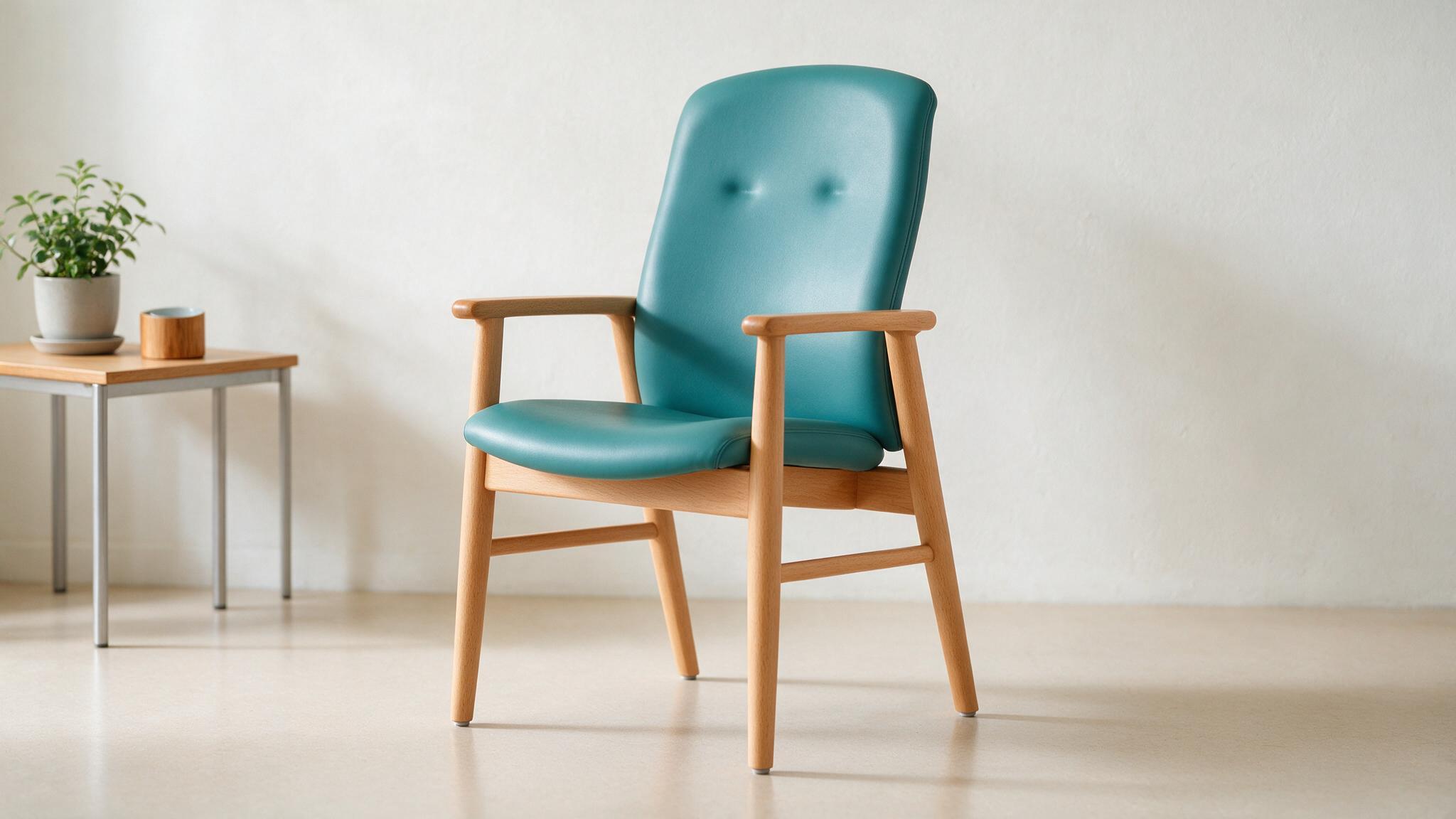
Clinical seating with a beech frame and wipe-clean vinyl seat and back
Fire regulations
Seating supplied into UK healthcare premises is contract furniture and must meet the relevant fire safety requirements for upholstered furniture in non-domestic settings. Ask the supplier to confirm the standard the composite has been tested to, in writing, before ordering.
If a supplier cannot tell you which fire standard the seat foam and cover were tested to as a composite, treat the specification as incomplete.
OMS Clinical Team
Practical points often missed
Specify arms where residents or patients need support to stand
Check stacking height if the room doubles as a meeting space
Match the vinyl colour across phases — batches drift over time
Confirm weight rating for bariatric requirements
Order a small quantity first and clean-test it for a fortnight
···
Optimised Medical Supplies stocks healthcare seating, examination couches and clinical furniture with wipe-clean vinyl upholstery. Talk to our team about specifying seating for a full waiting area.
Frequently asked questions
Why is vinyl used for healthcare seating instead of fabric?
Woven fabric absorbs spills and cannot be reliably disinfected between patients. Healthcare-grade vinyl is non-porous, wipes clean and tolerates the chlorine-releasing agents used in clinical cleaning.
What makes a clinical chair easy to clean?
Sealed or welded seams rather than stitched ones, a closed underside, a deliberate gap between back and seat rather than a tight crevice, and a moisture barrier backing that stops fluid reaching the foam.
Do healthcare chairs need to meet fire regulations?
Yes. Seating supplied into UK healthcare premises is contract furniture and must meet the fire safety requirements for upholstered furniture in non-domestic settings. Ask for the tested composite standard in writing.