Buyer's Guides
Laboratory Supplies: Getting Measurement and Samples Right
An underfilled boric acid urine container does not give you a slightly worse result. It can give you a negative one.
OMS Clinical Team
Product Specialists
Buyer's Guides
An underfilled boric acid urine container does not give you a slightly worse result. It can give you a negative one.
OMS Clinical Team
Product Specialists

Laboratory work depends on measurements being reliable, and reliability comes from the right item used properly rather than from buying the most accurate version of everything. Most of what goes wrong is not equipment failing. It is a container filled to the wrong level, a measure read at the wrong temperature, or a closure that leaked in a transport bag.
This covers what to specify and why. Our range is sample handling and volumetric measurement rather than instruments, so this is scoped to that: measures, cylinders, sample containers, tubes and the consumables around them.
Class A glassware is manufactured to roughly half the tolerance of Class B and is usually supplied with certification. That certificate is often what you are actually paying for rather than the extra precision, and it matters where a quality system requires traceable evidence of accuracy.
For the large majority of routine work, Class B is entirely appropriate. Making up a buffer that will be pH-adjusted anyway, rinsing, transferring, rough dilutions: none of these are improved by a tighter tolerance. Buy Class A where the result has to be defensible, and Class B everywhere else. The glass is the same borosilicate in both.
Items are calibrated either to contain (TC) or to deliver (TD), and the marking is on the item. A TC vessel holds the stated volume. A TD vessel delivers the stated volume when emptied in the specified way, allowing for what stays behind as a film on the glass.
Using one as though it were the other introduces an error larger than the entire difference between Class A and Class B, which is why it is worth checking the marking rather than assuming. The calibration temperature is printed too, normally 20 degrees Celsius. Measuring a hot solution gives a volume that is not what the marking says.
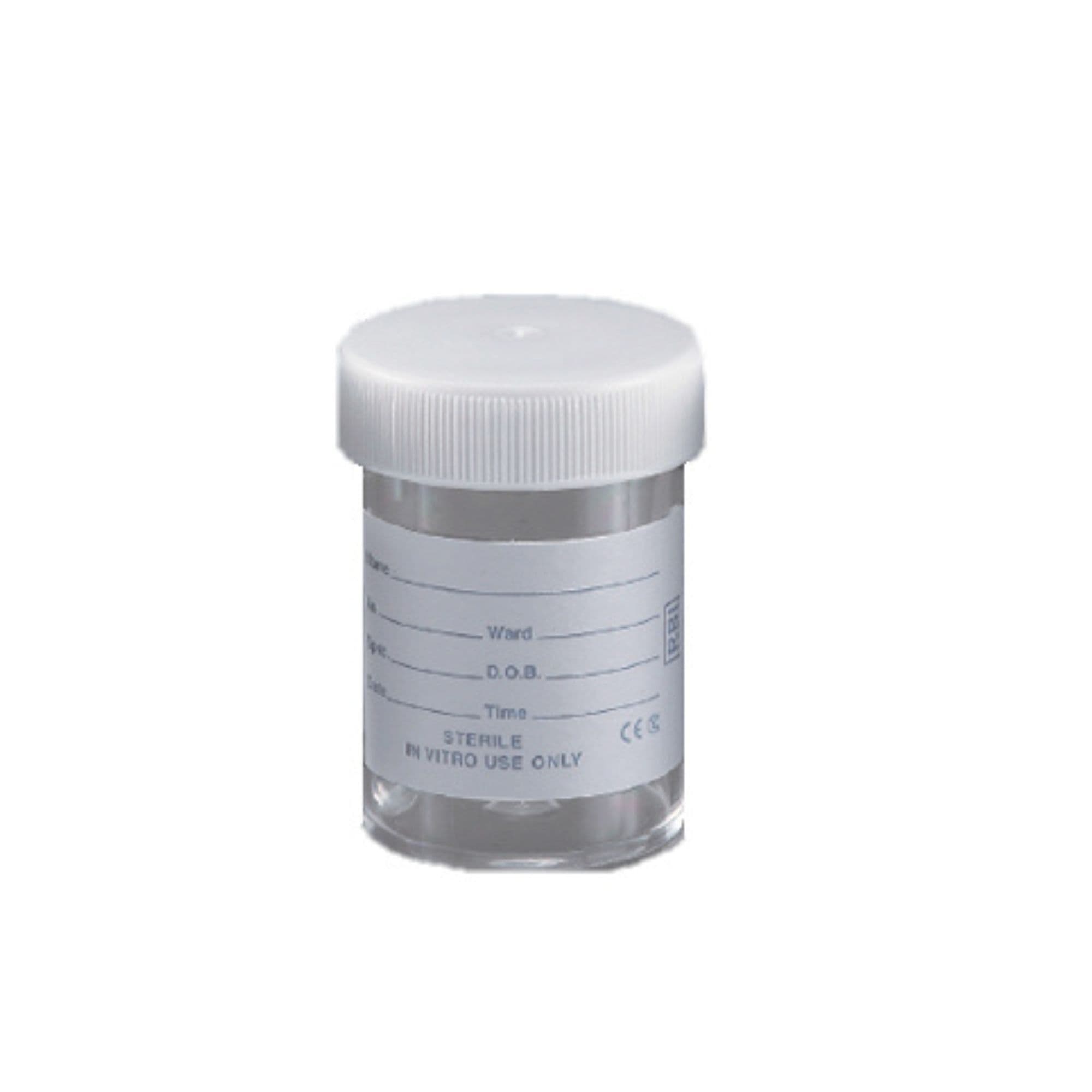
For sample and specimen containers the closure matters more than the container. A screw cap seals and survives a transport bag. A push-on lid is quicker at the bench and is a leak waiting to happen once it is in a bag with a request form.
Then decide sterility honestly. Sterile is required where the sample would be invalidated by contamination, and paying for it elsewhere buys a property you are not using while shortening the shelf life. Graduations matter where volume is part of the result rather than incidental.
This is the one to get right, because getting it wrong does not give a slightly worse result. It can give a wrong one.
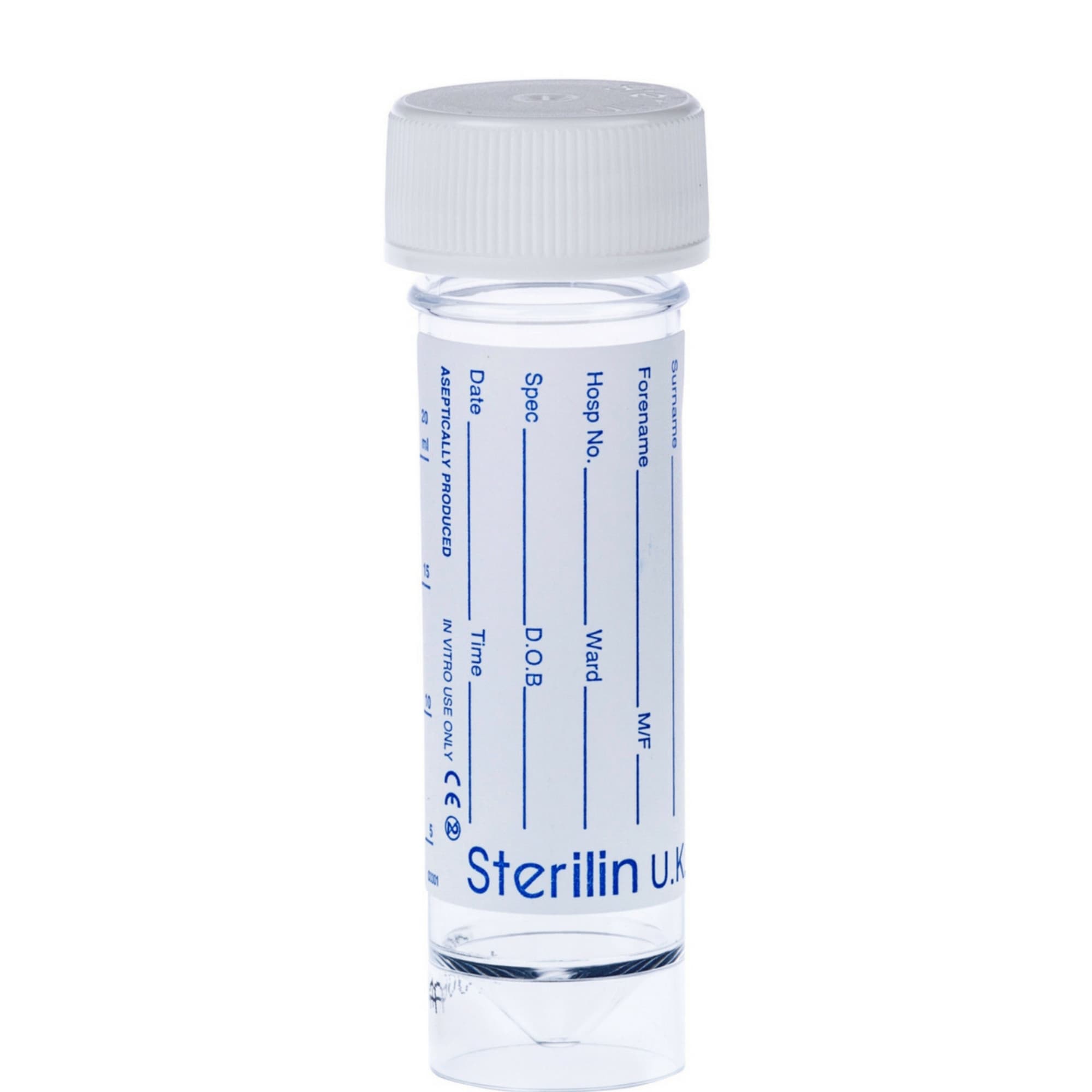
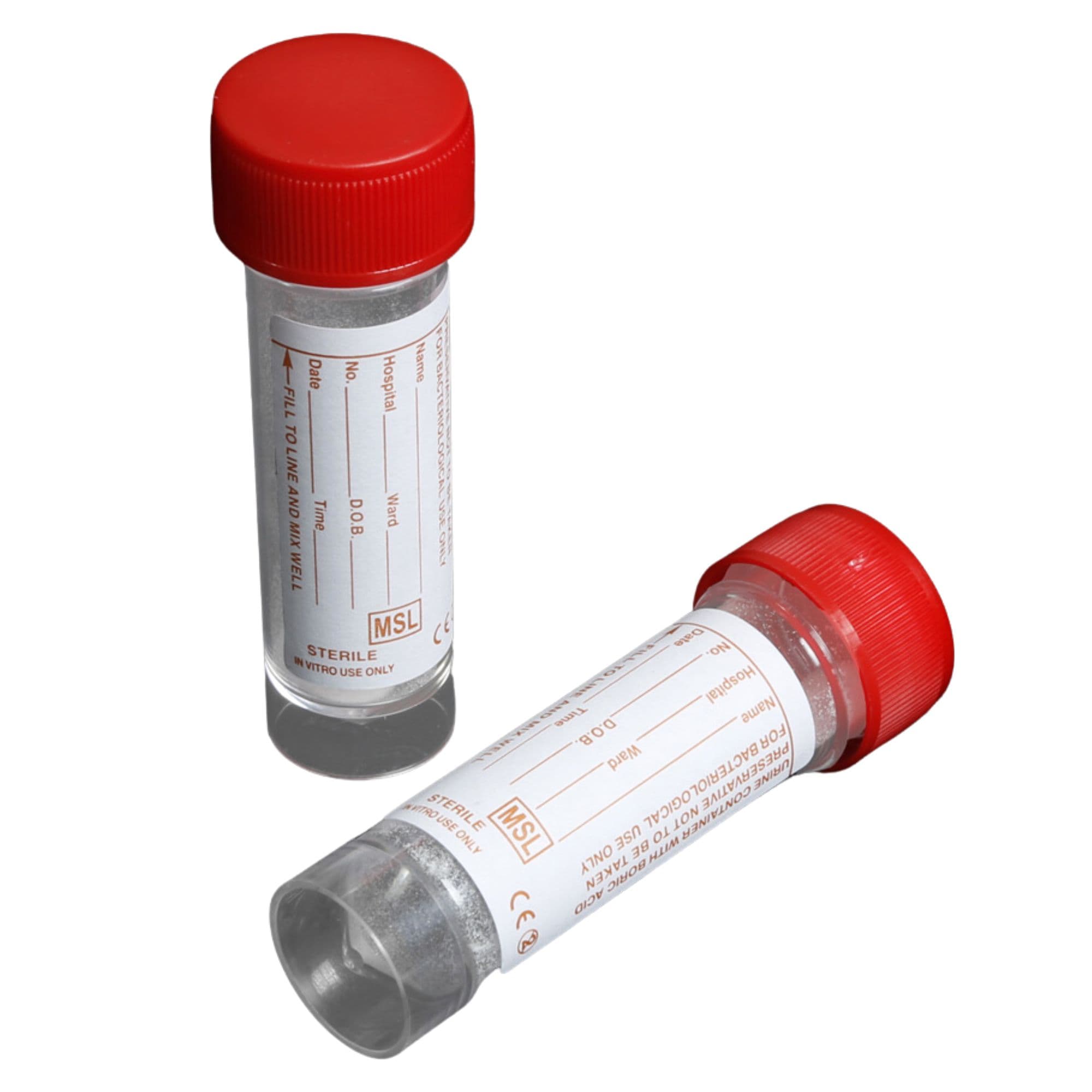
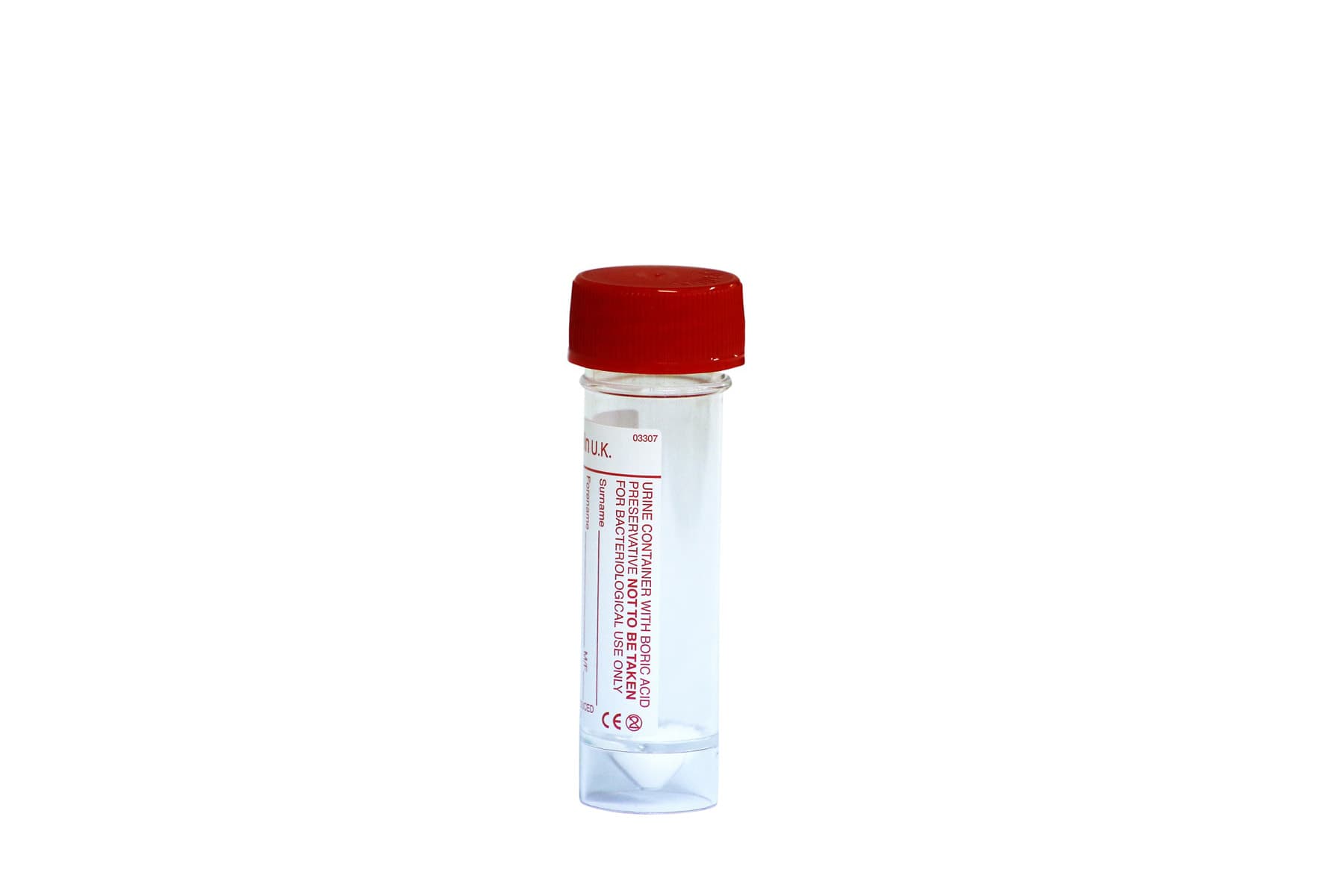
Boric acid preserves a urine sample in transit by stopping bacterial overgrowth, which is what keeps a culture meaningful when the sample cannot reach the laboratory quickly. The preservative works at a specific concentration relative to the volume of urine, which is why the bottle carries a fill line, usually at 10ml.
Underfill it and the concentration of boric acid rises. At that higher concentration it does not just preserve the organisms, it inhibits them, and the culture can come back negative for a patient who has an infection. Published evidence looking at inhibited samples found the majority of them were underfilled bottles. UK laboratories reject underfilled samples and ask for a repeat, which is the better outcome of the two.
A 24-hour urine collection is the other place where the container decides whether the result means anything, and unlike a spot sample there is no second chance without repeating the whole day.
Capacity is the first decision and the one most often got wrong. A collection that overflows partway through is not a partial result, it is no result. Two and a half litres covers most adults; five litres is the sensible choice where output is high or where the patient is likely to be cautious about running out. Underestimating to save a few pence is a false economy measured in a repeated collection.
The practical failure modes are worth spelling out to whoever is collecting, because they are all avoidable and all invalidate the sample. Discard the first void of the collection period and note the time. Collect everything after that, including the first void of the following morning at the end of the period. Keep the container cool during collection. And where the requested test needs a preservative, the container has to be the one containing it, added before collection starts rather than afterwards.
Centrifuge and microcentrifuge tubes are specified by volume, by whether the lid is integral or separate, and by whether they are sterile. Integral snap lids are faster and harder to lose. Separate caps seal better for anything that will be stored or transported.
Racks are the item nobody budgets for and everybody needs. A rack that matches the tube diameter keeps samples upright, which prevents the spills that contaminate a bench and lose a sample. Ordering tubes without checking they fit the racks you already have is a small annoyance that recurs weekly.
Once a sample leaves the building it is regulated. A diagnostic sample travels as a compliant package: a leakproof primary container, absorbent material sized to the volume, and a secondary bag with a separate document pouch so the request form arrives dry and readable.
The absorbent pad is the component most often left out, and a bag with a printed pocket is not the same as a compliant package. That is worth checking before an audit does.
Measures, containers, tubes and consumables are stocked in our laboratory supplies range.
From our catalogue
Delivery as soon as Thursday 29 October
Inc. VAT
Delivery as soon as Thursday 29 October
Inc. VAT
Delivery as soon as Thursday 29 October
Inc. VAT
Delivery as soon as Thursday 29 October
Inc. VAT