Buyer's Guides
Tablet Containers and Pots: Sizing, Materials and Moisture
Containers are usually chosen by capacity alone. Moisture, headspace and how the patient will actually open it matter more.
OMS Clinical Team
Product Specialists
Buyer's Guides
Containers are usually chosen by capacity alone. Moisture, headspace and how the patient will actually open it matter more.
OMS Clinical Team
Product Specialists

Tablet containers are usually picked on capacity: how many will fit. That is the least important of the decisions. What determines whether the medicine is still good in three months is moisture, headspace and the closure, and those are chosen separately.
Container capacity is quoted in millilitres or in a nominal tablet count, and the count assumes a tablet size the manufacturer chose. A pot rated for 100 tablets holds 100 of something. Large coated tablets or capsules will fill it at half that, and small uncoated tablets will rattle around in a third of the space.
Work from the volume you actually need for the products you dispense most, and hold two or three sizes rather than trying to cover everything with one. If you are consistently transferring into a larger pot at the counter, the range is wrong.
A container with a lot of air above the tablets carries a lot of moisture with it, and that moisture redistributes into the contents. For hygroscopic products a mostly empty large pot is worse than a full smaller one, even though both are sealed.
This is why the instinct to standardise on one big size costs money twice: you pay for the container and then for the shortened shelf life.
For most dispensing, polypropylene with a wadless or lined closure is the sensible default. Reach for something else only when the product gives you a reason.
Hygroscopic tablets take up water from the air inside the container. That can soften them, change how they dissolve, or in some cases degrade the active ingredient. A desiccant sachet or an integrated desiccant cap absorbs that moisture, which extends the useful life.
Do not add a desiccant to something that does not need one. It costs money, it is one more thing for a patient to mistake for a tablet, and for products that are not moisture-sensitive it achieves nothing.
The closure decision belongs with the patient rather than the product. Child-resistant is the expected default for solid dose dispensed to patients, but where someone has arthritis or reduced grip a non-child-resistant closure is the better clinical choice, and that decision should be recorded.
A patient who cannot open the pot will decant it into something else at home, which loses the labelling, the child resistance and the moisture protection in one go. Supplying an easier closure is safer than pretending the problem does not exist.
A pot has to carry the dispensing label, and the label has to be readable. Tall narrow containers curve tightly, so a standard label wraps and the text distorts at the edges. If your label is being applied at an angle or trimmed to fit, the container diameter is too small for the label stock rather than the label being wrong.
Check this with the actual label you use before committing to a container range. It is a cheap thing to get right at the ordering stage and an irritating one to live with afterwards.
For short courses of a few days, a blister strip in a bag is often better: less packaging, no transfer step, and the original manufacturer labelling stays intact. For anything going into a monitored dosage system the pot is only a transport step, so a plain one is fine.
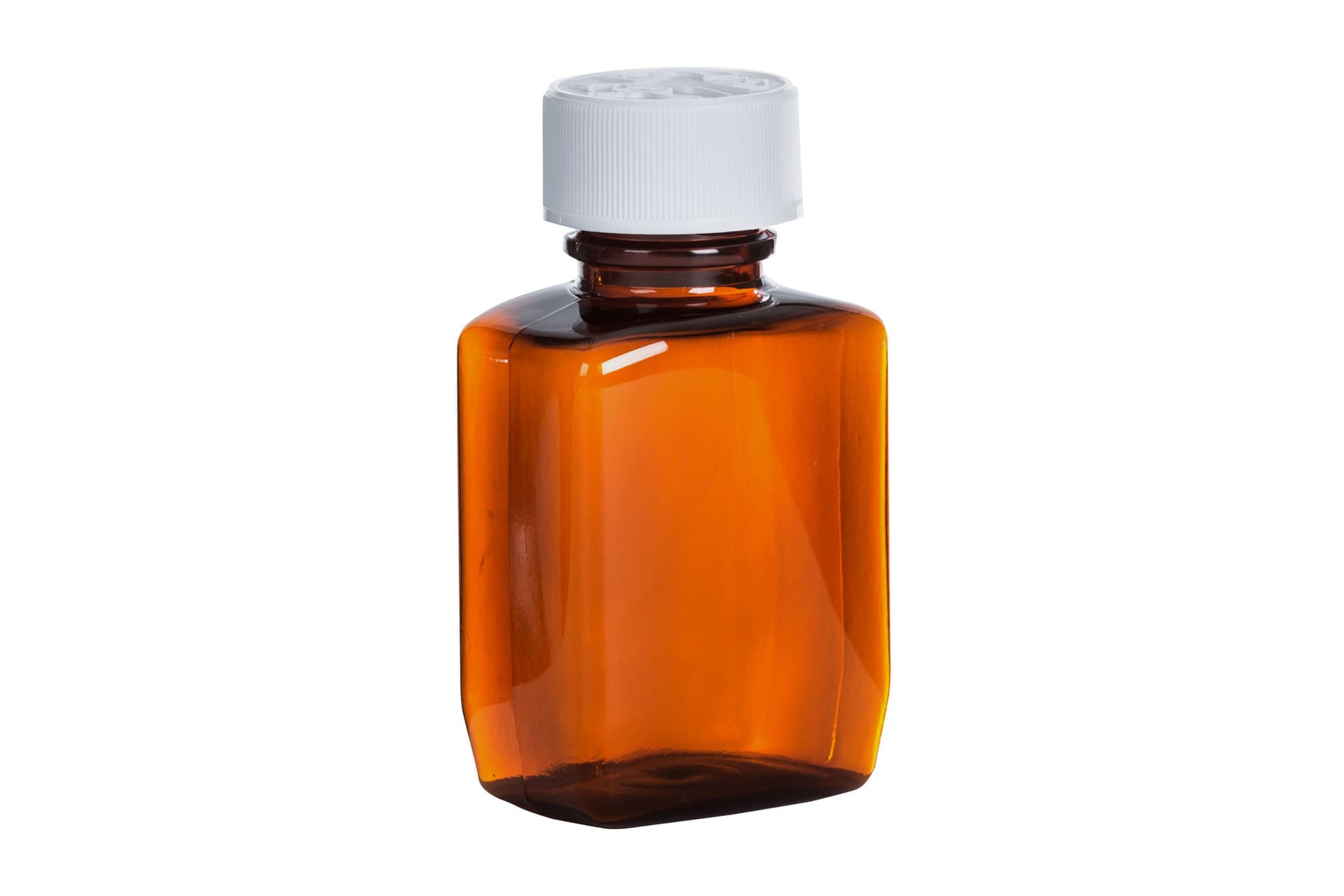
For liquids the answer is a bottle rather than a pot, even for a small volume. Pot closures are not designed to seal against liquid, and a pot in a delivery bag will leak.
From our catalogue
Delivery as soon as Wednesday 23 September
Inc. VAT
Delivery as soon as Wednesday 23 September
Inc. VAT
Delivery as soon as Wednesday 23 September
Inc. VAT
Delivery as soon as Wednesday 23 September
Inc. VAT