What must appear on a dispensed medicine label under the Human Medicines Regulations 2012 — the mandatory particulars, cautionary wording and practical labelling tips.
Every medicine dispensed to a patient in the UK must carry a label with a defined set of particulars. The requirements come from the Human Medicines Regulations 2012, and they are one of the most common findings in pharmacy inspections — usually not because a pharmacy does not know the rules, but because a label was truncated, smudged or printed on stock that would not hold ink.
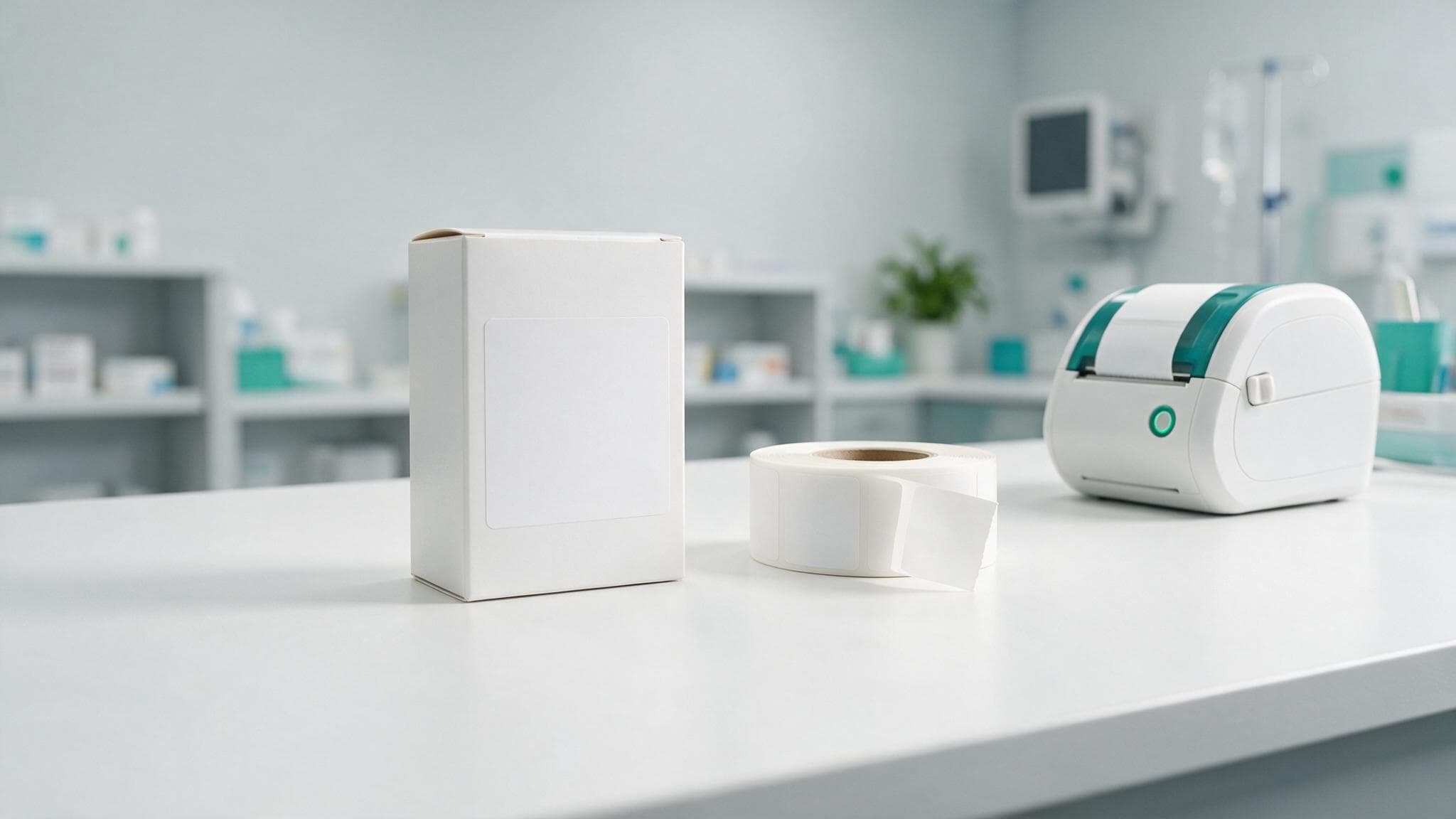
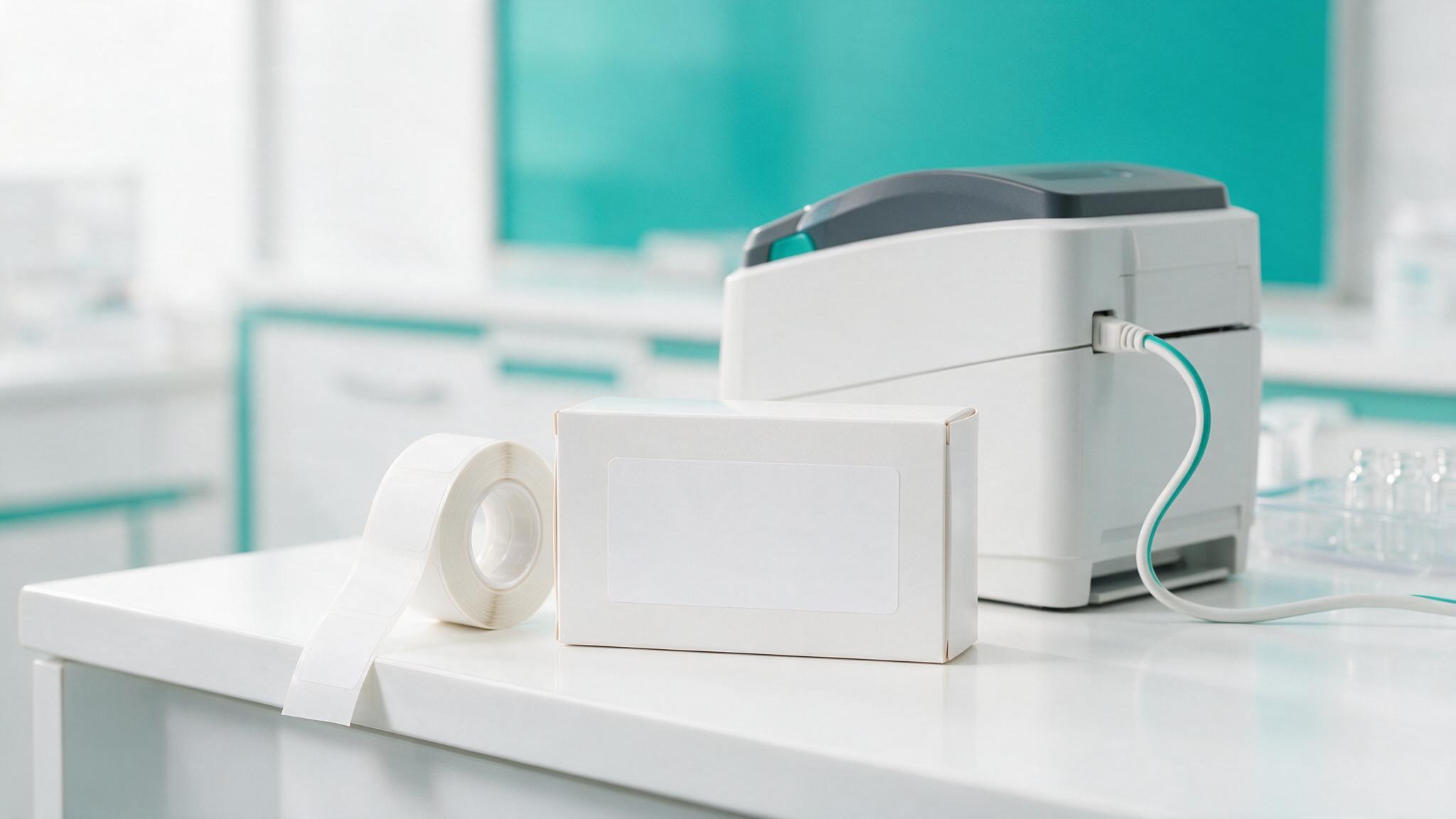
Dispensing labels and a thermal label printer at a pharmacy bench
The mandatory particulars
Regulation 257 sets out what a dispensed label must show. In practice every dispensing label should carry the following, legibly and indelibly.
Particular
Notes
Name of the patient
As written on the prescription
Name and address of the supplying pharmacy
Full trading address
Date of dispensing
The date of supply, not the prescription date
Name of the medicine
Including strength and form
Directions for use
The dose and frequency
Precautions relating to use
Cautionary and advisory wording
Keep out of the sight and reach of children
Or wording to that effect
Cautionary and advisory labels
Beyond the mandatory particulars, the British National Formulary assigns numbered cautionary and advisory labels to many medicines — warnings about drowsiness, alcohol, sunlight exposure, completing the course, or avoiding certain foods. These are applied in addition to the dispensing label and should not obscure it.
Apply cautionary labels where the BNF specifies them for the product
Never cover the batch number or expiry date on the manufacturer’s packaging
Where the original pack is split, ensure the expiry and batch remain traceable
Use a label size that fits the container without wrapping around a curve
Practical labelling failures
Most labelling problems are physical rather than legal. Thermal labels fade in warm storerooms. Adhesive lifts on cold-chain items taken in and out of a fridge. Small labels applied to curved bottles peel from the edges. Choosing the right stock for the environment matters as much as the wording.
If a label cannot survive the journey from the dispensary to the patient’s kitchen cupboard, it is not compliant — it is only compliant on the day it is printed.
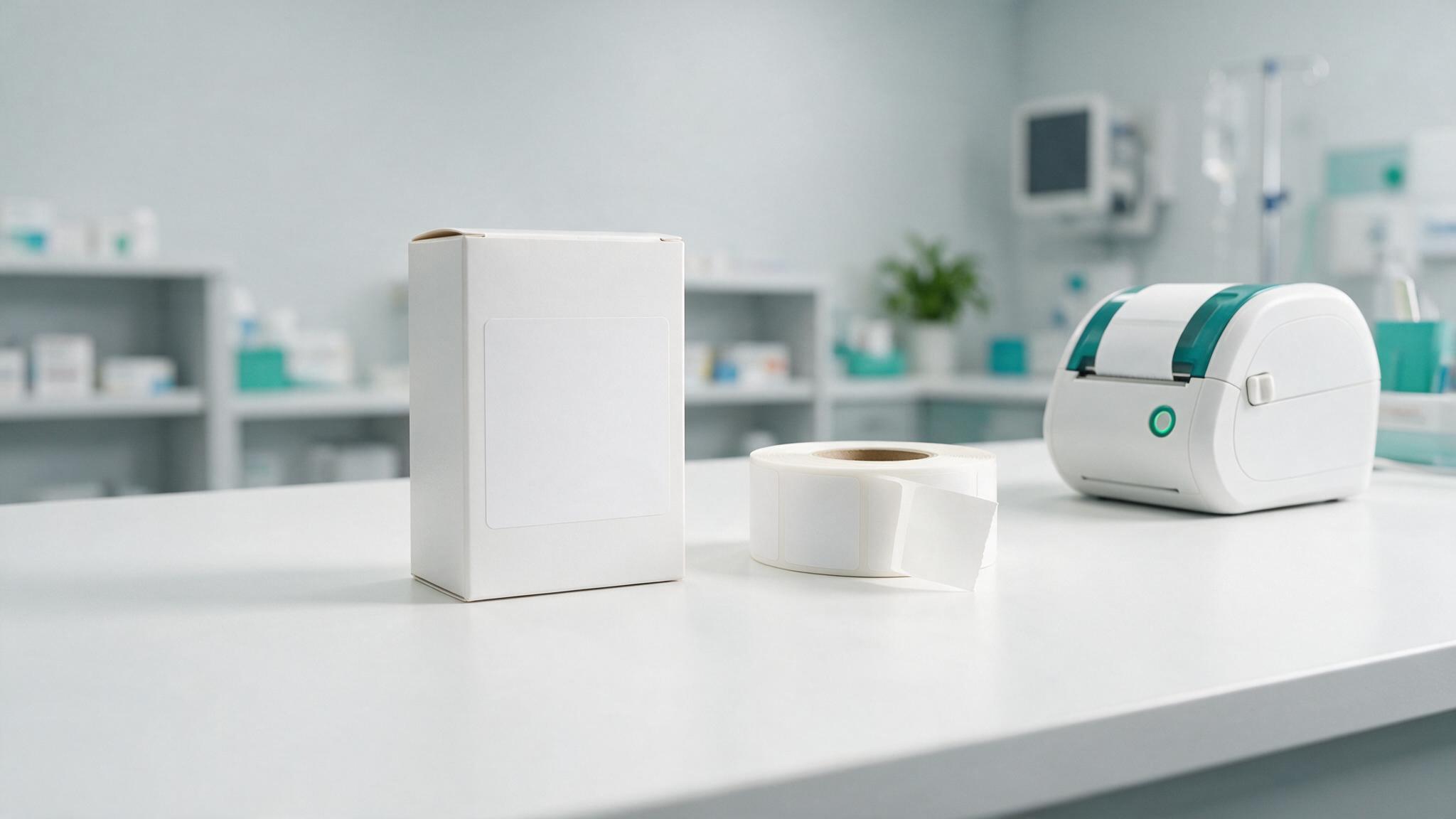
OMS Clinical TeamBlank adhesive dispensing labels on a roll ready for printing
Choosing label stock
Standard paper — economical, suited to dry ambient storage and short-dated supply
Freezer and fridge grade — adhesive formulated to hold at 2–8°C and below
Synthetic or laminated — resists moisture, handling and abrasion for items in frequent use
Small-format status labels — for fridge item, to pay, exempt, caution and date-of-opening messages
···
A short pre-supply check
All mandatory particulars present and legible
Cautionary and advisory labels applied per the BNF
Batch number and expiry still visible on the pack
Label adhered flat with no lifting edges
Patient name matches the prescription exactly
Optimised Medical Supplies stocks pharmacy dispensing labels, status and caution labels, and date-of-opening labels in a range of sizes and adhesives. Order before 4pm for next-day dispatch on stocked lines.
Frequently asked questions
What must be on a dispensed medicine label in the UK?
Under the Human Medicines Regulations 2012 a dispensing label must show the patient’s name, the pharmacy name and address, the date of dispensing, the medicine name and strength, directions for use, any precautions, and wording to keep the medicine out of the sight and reach of children.
Are BNF cautionary labels a legal requirement?
Cautionary and advisory labels are assigned by the British National Formulary and are considered professional best practice. They are applied in addition to the mandatory particulars and should never obscure them.
Which label stock should I use for fridge lines?
Use a fridge or freezer grade adhesive rated for 2–8°C. Standard paper adhesive can lift when items are repeatedly moved between cold and ambient storage.