Sharps Bin Collection: Sizing, Frequency and What the Contract Covers
A collection contract is a rate times a frequency. The frequency is decided by how fast you fill a bin, which makes bin size the one part of the bill you actually control.
Sharps collection is usually set up once, by whoever was in the room, and then never looked at again. The contract renews, the bins get changed on whatever day the lorry comes, and nobody checks whether the arrangement still matches what the building actually produces.
That is how practices end up paying for a scheduled collection of bins that are a third full, and how care homes end up with a bin standing past its fill line on a Thursday because the next collection is Monday. Both are the same mistake made in opposite directions: the bins were chosen for the room, and the collection frequency was inherited rather than calculated.
This guide covers the operational side of sharps collection for businesses. The compliance side, which is a genuinely separate subject, is covered in clinical waste collection and duty of care: who is allowed to carry the waste, what paperwork moves with it and how long you keep it. It is worth reading once. This one is about what you are buying and how often you need it.
What a collection contract actually covers
Contracts vary more than people expect, and the differences are rarely on the front page of the quote. Three things decide what you are signing up to:
Exchange or top-up. An exchange service takes the sealed bin and leaves a clean one of the same size. A top-up service leaves replacements against an agreed stock level. Exchange is simpler to audit, because the count in equals the count out.
Scheduled or on-call. Scheduled collection comes on a fixed rota whether or not the bins are full. On-call comes when you ask. Scheduled suits predictable volume, on-call suits sites where volume moves with clinic dates.
What the minimum is. Most contracts carry a minimum charge per visit or a minimum number of visits per year. That minimum, not the per-bin rate, is usually what decides the annual cost for a small site.
Ask which of the three you are being quoted for before comparing two prices, because a cheap per-bin rate attached to a weekly minimum is not cheaper than a higher rate collected monthly.
Frequency is arithmetic, not a preference
The useful question is not how often collection should happen in general. It is how long one bin lasts in the place it actually stands, which is a calculation anybody can do in a week.
Count what goes into a bin over five working days in a normal week, not a quiet one. Then work against the usable capacity rather than the stated capacity, because a bin is sealed at its marked fill line and the space above that line is not yours to use. Treat roughly three quarters of the stated volume as the figure to plan with.
That gives you the interval. A treatment room filling a 5L bin in three weeks does not need fortnightly collection. A dressing clinic filling a 22L bin in nine days does not want a monthly one. Do it per location rather than per building: the phlebotomy room and the back office are not the same problem, and averaging them gets both wrong.
Pick the bin for the interval, not for the room
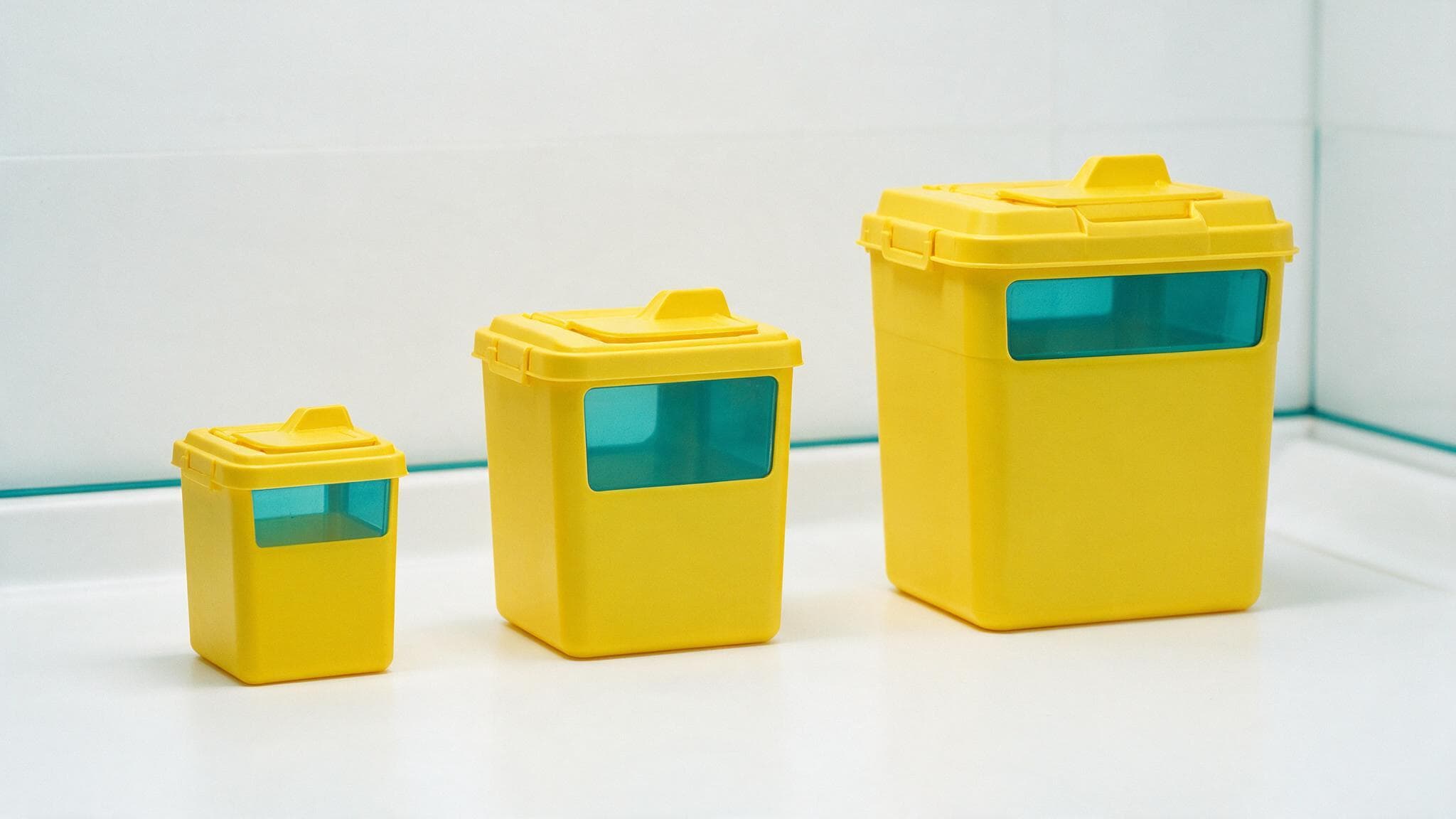
Once you know the interval you want, bin size becomes the lever that gets you there. Our range runs from 0.5L up to 24L, which is a wide enough spread that almost any interval can be hit with the right container rather than with more visits.
The instinct is to choose the bin that fits neatly where it is going. That is the wrong order. A bin too small for the interval gets sealed early and stacked, which quietly creates a storage problem and adds to the count. A bin too large sits half full at collection, which is volume you paid to move. Work out the interval first, choose the capacity that matches it, then solve where it stands, using a bracket or holder if it will not sit safely.
Position matters as much as size. A bin that is awkward to reach from where the procedure happens gets bypassed in favour of the nearest one, and that is how segregation fails and how needles end up somewhere they should not be. The rule of thumb is that the bin goes within arm's reach of the point of use, not by the door. There is more on matching size to room in our guides to sharps bin sizes and lid colours and clinical waste bin sizes.
Sealing, and the one thing that undoes it
A sharps bin is sealed at the fill line, using the permanent closure, and then it is finished. The temporary closure is for between uses, not for transport or storage. Bins should be labelled so the producing site is identifiable before they go anywhere.
Worth agreeing with your contractor: what happens to a bin sealed early because of a spike, and whether it can wait for the next scheduled visit or triggers an extra one. That conversation is much easier before it happens than on the day.
What moves the price
Quotes are rarely comparable line for line, but the variables behind them are consistent:
Number of visits per year, which is the biggest single factor and the one you influence through bin sizing
Number and size of containers exchanged at each visit
Access: a site the crew can reach with a trolley costs less to serve than one with stairs, a lift or a timed loading bay
Time of day, since collections outside normal hours cost more on most contracts
The waste stream itself, because cytotoxic and medicinal sharps go to a more expensive route than infectious sharps
Whether bins are supplied as part of the service or bought separately, which changes what looks like the cheaper quote
That last one catches people out when comparing a bundled service against a collection-only contract. Buying bins separately is often cheaper overall, but only once the sizing is right, because the saving disappears if it produces more visits.
A care home, a pharmacy and a practice are not the same job
The same contract structure applies in each, but what drives the volume differs enough to change the answer:
Care homes generate steady, distributed volume: insulin, anticoagulants, and daily rounds across multiple rooms. Usually several small bins rather than a few large ones, which raises container count. Sharps safety obligations for employers are covered in our guide to the 2013 sharps regulations.
Pharmacies are less predictable, because volume depends on services offered. A pharmacy running vaccinations has a seasonal spike that looks nothing like its baseline, and patient returns are a separate stream with separate rules.
GP practices and clinics concentrate volume in specific rooms on specific days. This is the setting where per-room intervals differ most, and where a single site-wide frequency wastes the most money.
Where sharps actually go
Sharps are not recycled, and it is worth saying plainly because it comes up. The needle is contaminated, the container is designed never to be reopened, and separating the two safely costs more than the material recovers.
Beyond that, the route is decided by the stream rather than by the bin. Sharps contaminated with medicines, and anything cytotoxic or cytostatic, go for incineration. Infectious sharps with no medicinal contamination may go to alternative treatment where the receiving site holds the right permit. Which stream you are in is set by the lid colour, and that is decided by what goes in, which is the subject of our HTM 07-01 colour coding guide.
The paperwork, briefly
Every collection moves on a document, and you keep your copy: waste transfer notes for at least two years, hazardous waste consignment notes for at least three. Most clinical waste is hazardous, so the second is the one that usually applies. Your duty of care does not end when the lorry leaves, which is why the carrier registration check matters before the first collection rather than after a problem. All of that is set out properly in the duty of care guide, and it is the half of this subject that gets people prosecuted.
If you are a patient rather than a business
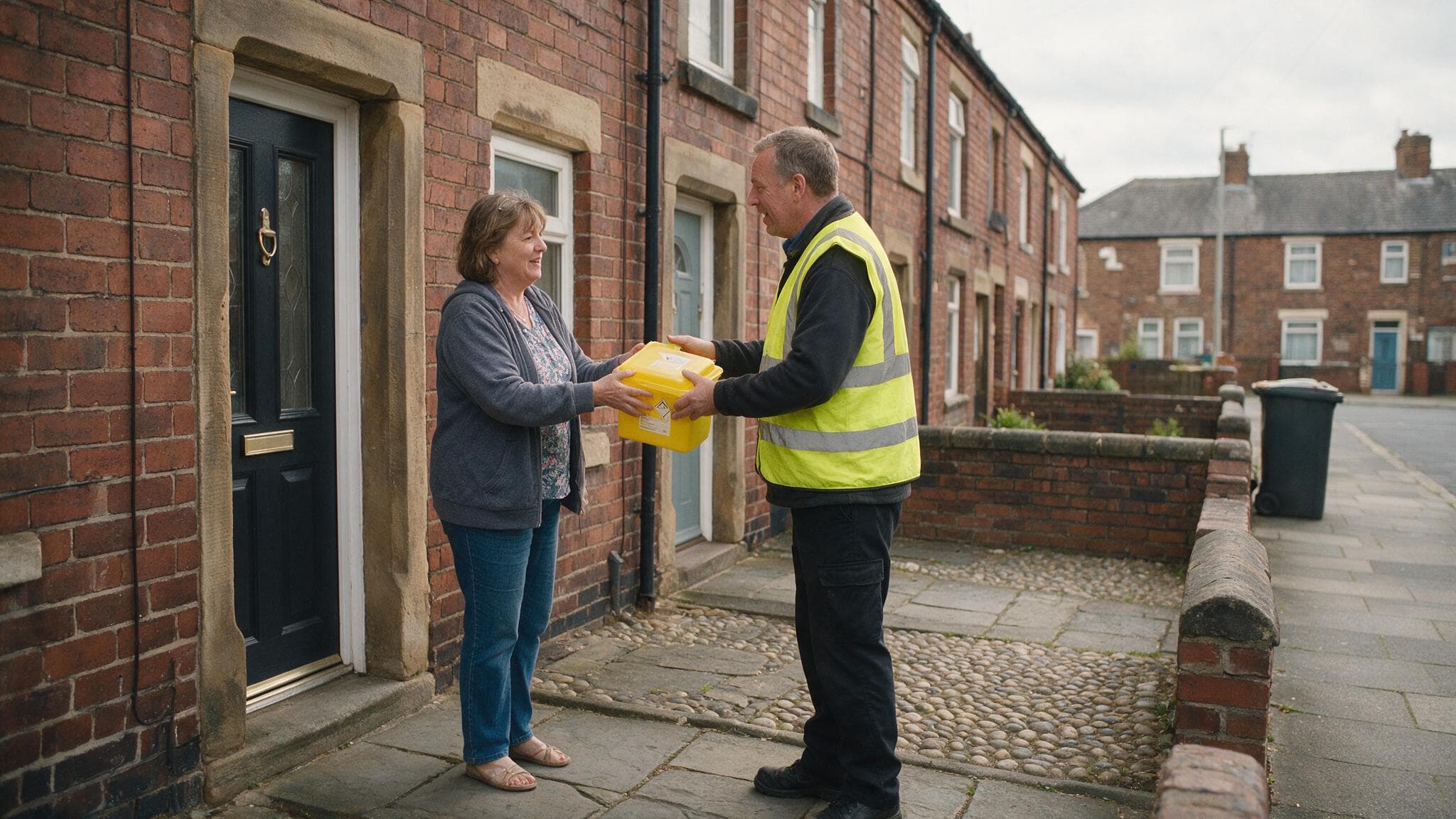
This guide is written for premises with a waste contract. If you inject at home, or you are caring for a relative who does, the route is different and usually runs through your council or a pharmacy scheme rather than a commercial contractor. That is covered separately in sharps disposal at home.
The short version
Establish what each location fills in a normal week, then check it against a busy one.
Plan against roughly three quarters of stated capacity, because the fill line is the limit.
Choose the bin size that produces the interval you want, then solve where it stands.
Put the bin within arm's reach of the point of use, not by the door.
Check whether the quote is exchange or top-up, scheduled or on-call, and what the minimum charge is.
Never decant a sealed bin. If the economics push that way, the sizing is wrong.
Keep consignment notes for at least three years, and check the carrier is registered before the first collection.
We supply the bins rather than the collection service, so there is nothing being sold in the advice above. The range runs from 0.5L bedside containers to 24L units across the lid colours, and is stocked in our medical disposables and PPE range.
Frequently asked questions
How often should sharps bins be collected?
There is no standard interval. Work it out per location: count what one bin takes in a normal working week, plan against roughly three quarters of its stated capacity because it is sealed at the fill line, and set the frequency so bins are sealed when close to full rather than early or late. Check the figure against a busy week too, since vaccination seasons and caseload changes can double volume.
What size sharps bin do I need?
Whichever size produces the collection interval you want in that specific location. Sizes run from 0.5L up to 24L. A bin too small gets sealed early and stacked, creating a storage problem; one too large is collected half full, which is volume you paid to move. Decide the interval first, then pick the capacity, then solve where it will physically stand.
Can a business put sharps bins out with the normal waste?
No. Sharps are clinical waste and must be handed to a registered waste carrier under a duty of care that does not end when the waste leaves your premises. Putting them in general or municipal waste risks prosecution for the outcome, not just for the act.
Who is allowed to collect sharps waste from a business?
A registered waste carrier whose registration is current, matches the company invoicing you and covers the waste type you are producing. The register is public and free to search, so check before the first collection and keep a dated note that you did.
What paperwork should I get with a sharps collection?
A waste transfer note for non-hazardous waste, kept at least two years, or a hazardous waste consignment note for hazardous waste, kept at least three. Most clinical waste is hazardous, so the consignment note is usually the one. It should be completed before the waste moves rather than retrospectively.
Can a sharps bin be emptied and reused?
No. The permanent closure is designed to be used once, and opening a sealed bin to consolidate contents exposes whoever does it to the contents and defeats the closure. If saving collection charges is making that tempting, the bin sizing or the collection frequency needs changing instead.
No. The needle is contaminated and the container is built never to be reopened, so separating the two safely costs more than the material is worth. Sharps contaminated with medicines, and anything cytotoxic, go for incineration; infectious sharps without medicinal contamination may go to alternative treatment where the receiving site is permitted for it.