Buying the right bin is the easy half. The half that gets people into trouble is what happens after it is full: who takes it, whether they are allowed to, what paperwork changes hands, and how long you keep it.
This covers the collection side. We supply the bins rather than the collection service, so there is nothing being sold here. What follows is what a practice, pharmacy or care home needs to have straight before an inspection asks.
Your duty of care does not end at the door
Section 34 of the Environmental Protection Act 1990 places a duty of care on everyone who produces, holds, carries or disposes of controlled waste. The part people miss is that it does not stop when the waste is collected. You remain responsible for waste you produced, through to its final recovery or disposal.
In practice that means if your clinical waste is later fly-tipped, and you cannot produce a valid transfer note or show that you checked the carrier was registered, you can be prosecuted for the outcome. Not the person who dumped it. You, as well. There is no upper limit on the fine a court can impose.
Check the carrier is registered, before the first collection
Anyone transporting your waste must be a registered waste carrier. The register is public and free to search, so there is no reason to take it on trust or to accept a certificate emailed as a picture.
Check the registration is current, that the name on it matches the company actually invoicing you, and that it covers the type of waste you are handing over. Then note when you checked it. A dated note in your own records is what turns a verbal assurance into evidence.
Registration is current, not expired
The registered name matches the company on your contract and invoices
The registration covers the waste type you are producing
The site the waste goes to holds the right permit for it
Your own record of when you checked, kept with the contract
Transfer notes and consignment notes are not the same thing
Non-hazardous waste moves on a waste transfer note. Hazardous waste, which is where most clinical waste sits, moves on a hazardous waste consignment note. Both have to be completed before the waste moves rather than filled in afterwards, and both have to be produced on demand.
The retention periods differ and are worth committing to memory: waste transfer notes for at least two years, hazardous waste consignment notes for at least three. Keep them somewhere that survives a change of practice manager, because that is exactly when an inspection finds the gap.
Waste transfer note, non-hazardous, kept at least two years
Hazardous waste consignment note, kept at least three years
Completed before the waste moves, not retrospectively
Filed where a successor will find them, not in one person's inbox
Cross-checked against invoices, since a collection you paid for with no note is a gap
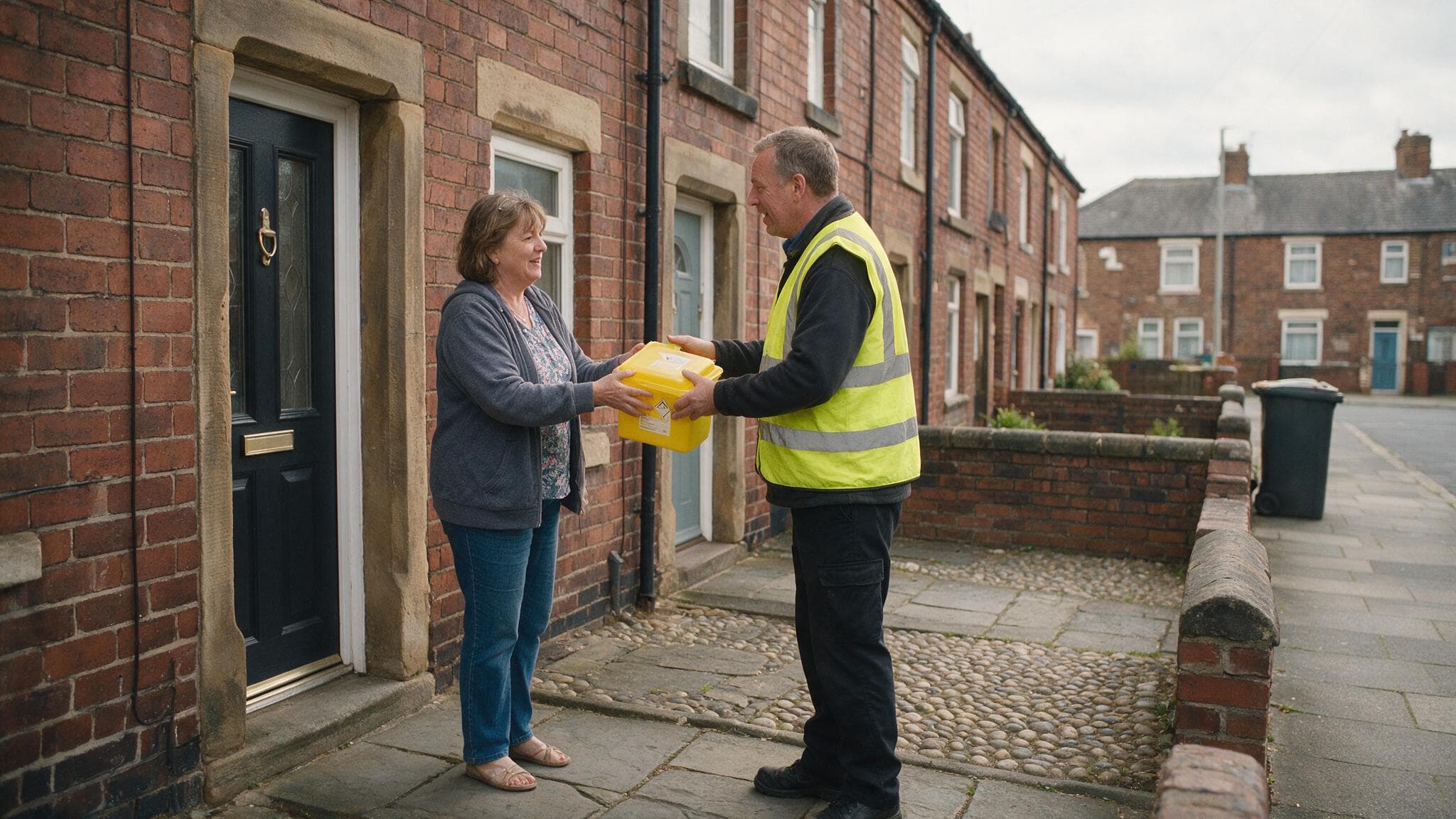
Who actually collects it
There is no single answer, and which route applies depends on who you are rather than what the waste is.
A private licensed contractor, which is the normal route for practices, pharmacies, care homes and clinics
The local council, where a household or community sharps service exists, though provision varies considerably between areas
An NHS arrangement, where a trust or board contract already covers the site
A pharmacy or GP take-back scheme, which some areas run for patients rather than for businesses
For a patient injecting at home the route is usually the council or a pharmacy scheme, and it is worth checking locally rather than assuming, because the same question has different answers two counties apart. We have written that up separately for people caring for themselves or a relative at home.
What actually happens to it after collection
People ask this more than you would expect, and the honest answer is that it depends on the stream. Clinical waste is not one thing, and the route is decided by what is in the bin rather than by the bin itself.
Broadly, some streams go to high-temperature incineration, which is the route for waste that has to be destroyed rather than merely made safe. Others go to alternative treatment, typically steam sterilisation in an autoclave followed by shredding, after which the residue can go on to energy recovery or landfill depending on what it was. Your consignment note records the route, which is the practical reason to actually read one occasionally rather than just filing it.
Sharps are generally not recycled, and it is worth saying so plainly because the question comes up. The needle is contaminated, the bin is designed never to be reopened, and separating the two safely costs more than the material is worth. The bin and its contents are treated as a single item.
Sizing collections to what you actually produce
Two failure modes, and both are avoidable. Collections too infrequent means bins overfilled past the fill line, sealed late, or stored somewhere they should not be. Collections too frequent means paying for a lorry to collect a quarter-full bin.
Work from what you produce in a normal week rather than a busy one, then check it against a busy one. Seasonal services change this sharply: a flu clinic season produces far more sharps waste than the same premises does in June, and a contract sized for June will not cope.
The other lever is bin size and siting. A bin that is the wrong size for the room gets ignored in favour of the nearest one, which is how segregation fails. Getting the size and the position right reduces both the waste volume and the number of collections.
Storing it while you wait
Between sealing and collection the waste is still yours and still your responsibility. It needs to be somewhere secure, away from the public, away from anywhere clinical activity happens, and protected from weather and animals.
Secure and not accessible to the public or to children
Away from food, clinical areas and anywhere patients wait
Sealed properly, with the bin closed at the fill line rather than pressed down
Labelled so the producer is identifiable
Under cover, since a rain-filled cage is a problem nobody wants to open
What we do and do not do
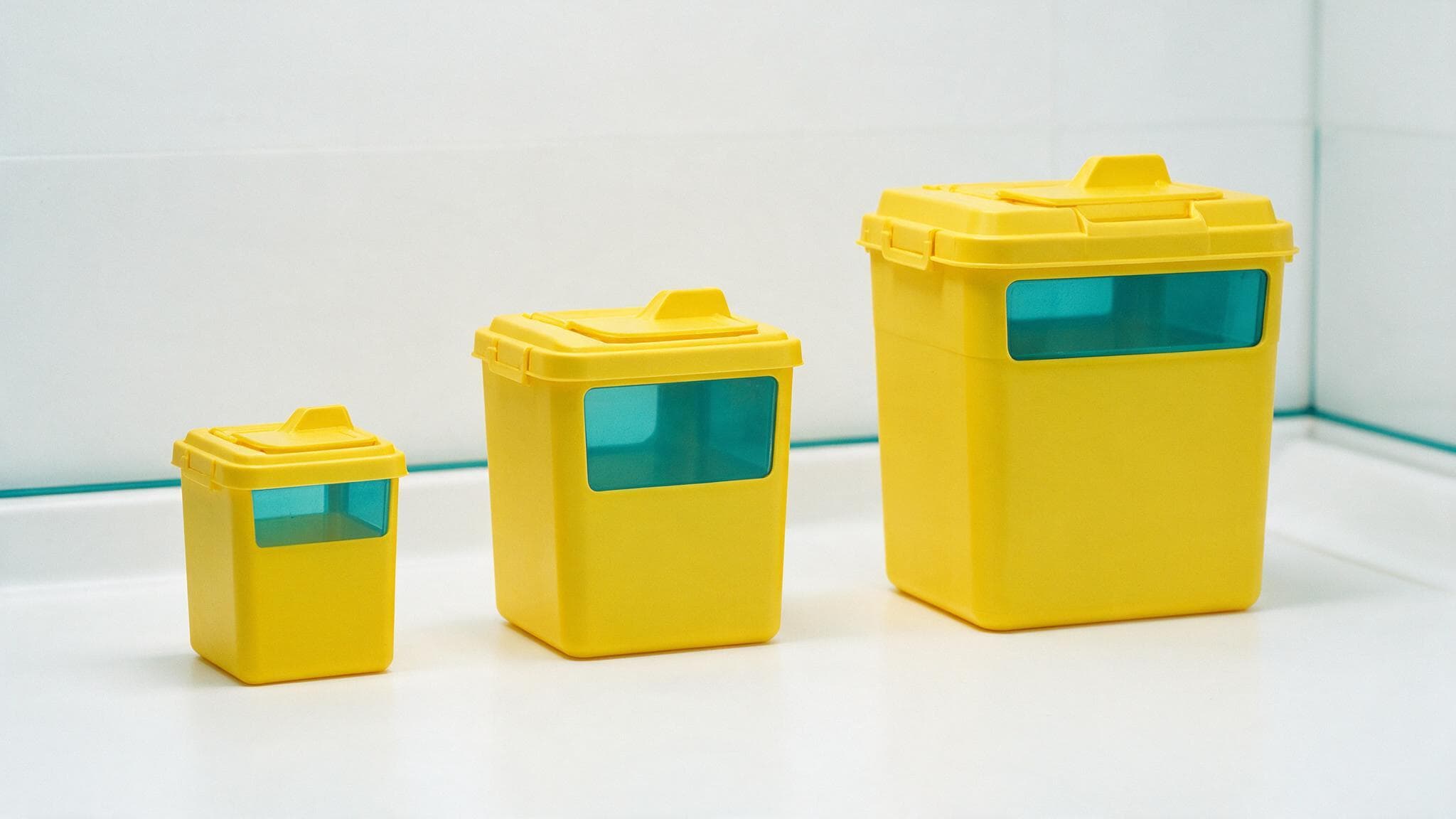
We supply sharps bins and clinical waste containers across the lid colour codes, from small bedside units to large wheeled bins, including fire-retardant options for corridors and plant rooms. We do not collect waste and we are not a licensed carrier, so we will not quote for it.
If you need collection, use a licensed contractor and run the register check above. If you need the bins, that we can do, and getting the sizing right at the buying stage is usually what makes the collection contract cheaper.
Who is legally responsible for clinical waste after it is collected?
You are, alongside the carrier. Section 34 of the Environmental Protection Act 1990 places a duty of care on everyone who produces, holds, carries or disposes of controlled waste, and it does not end when the waste leaves your premises. If the waste is later fly-tipped and you cannot produce a valid transfer note or show you checked the carrier was registered, you can be prosecuted, and there is no upper limit on the fine.
How do I check a waste carrier is registered?
The register of waste carriers is public and free to search, so check it directly rather than accepting an emailed certificate. Confirm the registration is current, that the registered name matches the company invoicing you, and that it covers the waste type you are handing over. Then record the date you checked and keep it with the contract, because a dated note is evidence and a verbal assurance is not.
What is the difference between a waste transfer note and a consignment note?
A waste transfer note covers non-hazardous waste. A hazardous waste consignment note covers hazardous waste, which is where most clinical waste sits. Both must be completed before the waste moves rather than afterwards. Transfer notes are kept for at least two years and hazardous waste consignment notes for at least three.
How long do I need to keep clinical waste paperwork?
At least two years for waste transfer notes covering non-hazardous waste, and at least three years for hazardous waste consignment notes. Keep them somewhere a successor will find them rather than in one person's inbox, and cross-check them against invoices, since a collection you have paid for with no corresponding note is a gap an inspection will find.
How often should clinical waste be collected?
Frequently enough that bins are never overfilled past the fill line, and not so frequently that you are paying for a lorry to collect quarter-full bins. Size it on a normal week, then sanity-check it against a busy one. Seasonal services change this sharply, since a flu clinic season produces far more sharps waste than the same premises does in summer.
Where should sealed clinical waste be stored before collection?
Somewhere secure and not accessible to the public or children, away from food, clinical areas and patient waiting areas, under cover, and labelled so the producer is identifiable. The waste remains your responsibility between sealing and collection, so the storage arrangement is part of your duty of care rather than a detail.